An advertising copywriter is a marketing professional who crafts persuasive text to promote products, services, or brand initiatives. They blend market research, the psychology of advertising, and creative writing techniques to drive audience engagement and generate sales. Their daily work spans multiple formats, including digital ad campaigns, landing pages, and traditional print media.
Great marketing relies on great communication. Businesses invest billions of dollars annually to reach their target audiences, yet the success of those campaigns often hinges on a few carefully chosen words. Behind every memorable slogan, high-converting landing page, and engaging social media post is a skilled advertising copywriter who understands exactly how to connect with consumers.
An advertising copywriter acts as the bridge between a company’s goals and a customer’s desires. They do not merely write text; they engineer messages designed to provoke a specific action. By leveraging behavioral insights and consumer data, an advertising copywriter transforms generic features into irresistible benefits.
Relying on a professional advertising copywriter ensures that brand messaging remains sharp, consistent, and effective. As digital platforms multiply and consumer attention spans shrink, the ability to capture interest quickly is highly valuable. This guide explores the multifaceted role of an advertising copywriter, detailing the skills, strategies, and psychological frameworks required to succeed in modern marketing.
What Exactly Does an Advertising Copywriter Do Every Day?

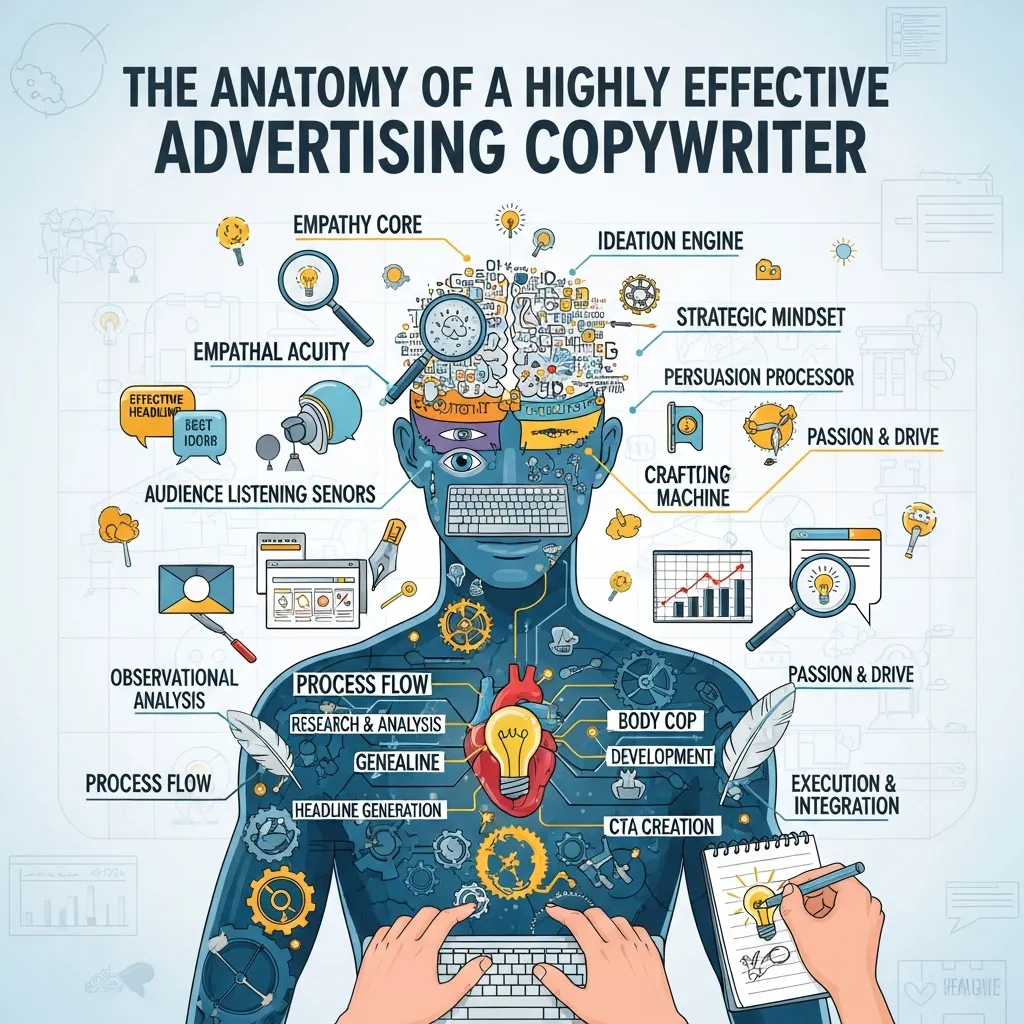
Defining the role of an advertising copywriter requires looking past the keyboard. While writing is the final output, the majority of an advertising copywriter’s time is spent on strategy, research, and ideation. An advertising copywriter is responsible for developing the textual elements (known as “copy”) for promotional materials.
Beyond just writing, an advertising copywriter acts as a behavioral strategist. They analyze target demographics, study competitor messaging, and collaborate closely with art directors, graphic designers, and marketing managers to ensure visual and textual elements align perfectly. Every word an advertising copywriter chooses serves a deliberate purpose, whether that goal is building brand awareness, generating leads, or closing a sale.
What Are the Essential Skills of an Effective Advertising Copywriter?
To succeed, an advertising copywriter must cultivate a diverse skill set that blends creative flair with analytical rigor.
Mastering the Written Word
An advertising copywriter must possess flawless grammar, exceptional vocabulary, and a deep understanding of sentence structure. Clarity and conciseness are paramount. The best advertising copywriter distills complex ideas into simple, impactful statements that anyone can immediately understand.
Understanding the Target Audience
Before typing a single word, an advertising copywriter studies the audience. They dive into demographics (age, location, income) and psychographics (values, interests, lifestyle). By understanding a customer’s specific pain points, an advertising copywriter can position a product as the ultimate solution.
Persuasion and Influence
An expert advertising copywriter knows how to move people to action. They employ proven persuasive techniques, framing offers in ways that highlight value and urgency. This requires an intuitive grasp of human motivation.
Research and Analysis
No advertising copywriter creates effective campaigns based on assumptions. They rely heavily on market trends, competitor analysis, and product research. An advertising copywriter must understand the product better than the consumer does to communicate its value effectively.
Adaptability Across Platforms
An advertising copywriter must seamlessly switch formats. The tone required for a playful TikTok script differs wildly from a formal B2B whitepaper. An agile advertising copywriter adapts their voice to fit the platform and the specific audience segment.
How Does the Psychology of Advertising Influence Compelling Copy?
The psychology of advertising forms the foundation of all effective copywriting. An advertising copywriter uses these psychological principles to bypass logical objections and tap directly into consumer emotions.
Emotional triggers play a massive role in purchasing decisions. An advertising copywriter might evoke a sense of belonging to sell lifestyle apparel, or trigger a fear of missing out (FOMO) to drive ticket sales for an event. By aligning the product with fundamental human desires—such as safety, status, or convenience—an advertising copywriter makes the offer feel essential.
Cognitive biases also heavily influence how an advertising copywriter structures their messaging. For example, the “anchoring effect” prompts an advertising copywriter to display a higher original price next to a discounted price, making the deal seem highly attractive. Furthermore, storytelling serves as a powerful persuasive tool. An advertising copywriter weaves narratives that allow the consumer to visualize themselves experiencing the product’s benefits firsthand.
What Types of Formats Does an Advertising Copywriter Handle?
The title of advertising copywriter serves as an umbrella term for several specialized disciplines. Depending on the project, an advertising copywriter may adopt different roles.
Sales Copywriter
A Sales Copywriter focuses purely on direct response and immediate conversions. They write high-pressure landing pages, long-form sales letters, and persuasive email campaigns. A Sales Copywriter measures their success strictly by conversion rates and revenue generated.
Ecommerce Copywriter
An Ecommerce Copywriter specializes in online retail environments. They craft compelling product descriptions, optimize category pages, and write digital ad copy for platforms like Google Shopping and Amazon. An Ecommerce Copywriter must balance persuasive selling with strict SEO requirements to ensure products rank highly in search results.
Blog Copywriting
Blog Copywriting involves creating long-form content marketing materials. While an advertising copywriter usually focuses on short, punchy ads, Blog Copywriting requires them to produce educational thought leadership articles that build brand trust over time. Good Blog Copywriting naturally guides readers toward a subtle call to action.
Social Media and Website Copy
An advertising copywriter frequently handles social media content, creating engaging, short-form posts designed for quick consumption and high shareability. Additionally, they develop core website copy, ensuring the homepage, about page, and service pages communicate a cohesive brand message.
Traditional Advertising
Despite the digital shift, an advertising copywriter still creates traditional media. This includes drafting billboard slogans, writing radio scripts, and conceptualizing TV commercials.
How Do Advertising Copywriters Craft Irresistible Headlines?
The headline is the most critical element an advertising copywriter produces. If the headline fails to capture attention, the rest of the copy goes unread.
An advertising copywriter treats headline creation as a science. They frequently rely on established formulas, such as the “How-To” structure, the “Listicle” format, or the “Curiosity Gap.” For example, an advertising copywriter might use the PAS (Problem, Agitation, Solution) framework in a headline to immediately validate a reader’s frustration before promising a fix.
Developing memorable brand taglines requires a similar approach. An advertising copywriter distills the entire ethos of a company into a few unforgettable words, aiming for rhythmic cadence and emotional resonance.
What Is the Standard Writing Process of an Advertising Copywriter?
A professional advertising copywriter follows a disciplined workflow to ensure high-quality results.
- Briefing and Objectives: The advertising copywriter begins by thoroughly reviewing the creative brief to understand the campaign goals, target audience, and key deliverables.
- Research and Ideation: The advertising copywriter immerses themselves in data, reading customer reviews, studying competitors, and brainstorming potential angles.
- Drafting and Refining: The advertising copywriter produces the initial copy, focusing on flow and structure before refining the word choice.
- Editing and Proofreading: The advertising copywriter ruthlessly cuts unnecessary words, ensuring the final piece is tight, clear, and grammatically flawless.
- A/B Testing and Optimization: Once live, the advertising copywriter reviews performance metrics, testing different headlines or calls to action to see which version drives the best results.
How Do Organizations Measure the Success of Advertising Copy?
An advertising copywriter cannot rely on subjective opinions; their work is judged by hard data. Organizations track specific metrics to evaluate an advertising copywriter’s effectiveness.
Conversion rates stand as the ultimate test for a Sales Copywriter, measuring the percentage of readers who complete the desired action. Click-through rates (CTR) reveal how effectively an advertising copywriter’s email subject line or ad headline captured attention. Engagement metrics—such as time on page and social shares—indicate how well Blog Copywriting holds the reader’s interest.
Ultimately, organizations look at the Return on Investment (ROI) of effective copywriting. A skilled advertising copywriter pays for themselves by consistently generating more revenue than they cost to hire.
What Is the Future of the Advertising Copywriter in an AI-Driven World?

The rise of generative AI has sparked intense debate about the future of the advertising copywriter. However, industry leaders view AI as a powerful tool rather than a replacement.
An advertising copywriter can use AI platforms to accelerate research, generate initial outlines, and overcome writer’s block. Yet, AI lacks true empathy, lived experience, and nuanced cultural understanding. The human element—the ability to connect deeply with another person’s emotions—remains the exclusive domain of a human advertising copywriter. The most successful advertising copywriter of tomorrow will be the one who seamlessly integrates AI efficiency with human creativity.
The Enduring Value of an Expert Advertising Copywriter
Organizations that wish to stand out in a crowded marketplace must prioritize exceptional messaging. An expert advertising copywriter brings a unique combination of strategic thinking, psychological insight, and creative writing to the table. By investing in a skilled advertising copywriter, businesses can transform passive readers into loyal customers, elevate their brand presence, and drive sustainable revenue growth for years to come.
FAQ (Frequently Asked Questions)
1. What does an advertising copywriter do?
They write persuasive marketing content for ads, websites, emails, TV commercials, and print campaigns that encourage consumers to take action.
2. What skills are needed to be a good advertising copywriter?
Strong writing, grammar, consumer psychology, research, creativity, and the ability to adapt messaging for different audiences and platforms are essential.
3. How does an advertising copywriter differ from a content writer?
A copywriter focuses on driving sales and conversions, while a content writer primarily educates, informs, and builds long-term audience trust.
4. What is the Psychology of Advertising in copywriting?
It involves using behavioral science and emotional triggers to create persuasive marketing messages that influence purchasing decisions.
5. Can AI replace an advertising copywriter?
No. AI is useful for brainstorming and drafting, but human creativity, strategic thinking, and emotional understanding remain difficult to replace.
6. What is the average salary for this profession?
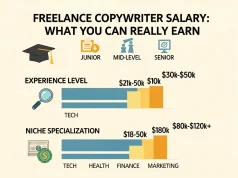
Salaries vary by experience and location, but many professionals earn between $50,000 and $90,000 annually, with senior specialists earning more.
7. How can I become an advertising copywriter?
Build a strong portfolio, learn marketing and SEO fundamentals, improve your writing skills, and gain experience through agencies or freelance work.
8. What is a Sales Copywriter?
A Sales Copywriter specializes in creating high-converting sales pages, promotional emails, direct mail, and other revenue-focused marketing materials.
9. What is an Ecommerce Copywriter?
This specialist creates product descriptions, category pages, and online store content that improves conversions and search visibility.
10. What is Blog Copywriting?
It is the practice of writing informative, SEO-friendly blog posts that attract readers, build authority, and support business goals.
11. How is success measured in this career?
Performance is typically evaluated through conversion rates, click-through rates, email open rates, and overall campaign ROI.
12. Do I need a degree to become one?
Not necessarily. While a degree in marketing, communications, or English can help, employers often value a strong portfolio and proven writing ability more.