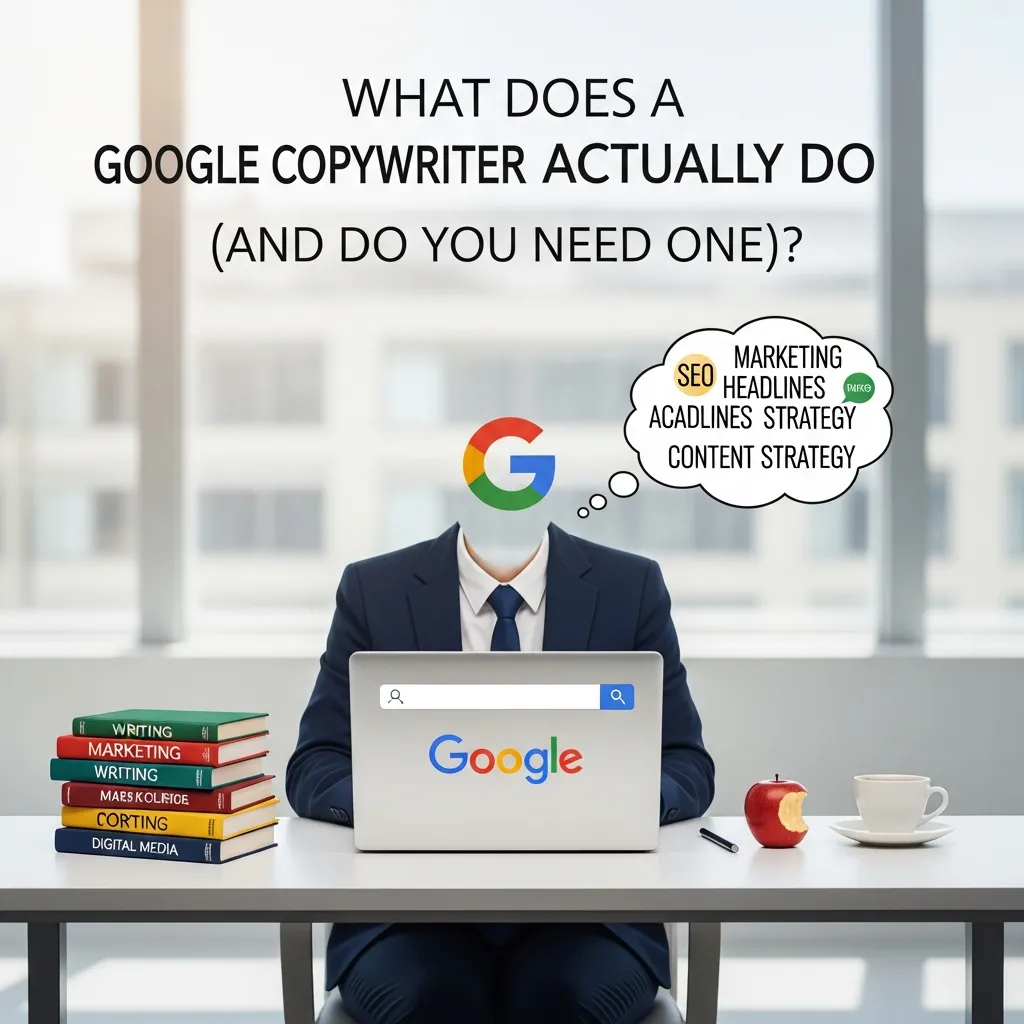
A Google copywriter specializes in crafting high-performing copy for Google Ads, SEO content, and digital marketing campaigns. By combining keyword strategy, user psychology, and data analysis, a skilled Google copywriter helps businesses increase visibility, drive qualified traffic, and convert clicks into customers.
Most businesses understand that showing up on Google matters. Fewer understand that what you say once you get there matters just as much. You can have the biggest ad budget on the block, but if your copy doesn’t speak to your audience’s intent, you’re burning money on clicks that go nowhere.
That’s where a Google copywriter comes in. Unlike a general copywriter who works across brochures, emails, and brand storytelling, a Google copywriter focuses specifically on the mechanics and psychology of Google’s ecosystem—ads, search results, local listings, and SEO-driven content. The discipline blends art and science in a way few other writing specialties do.
This post breaks down everything you need to know: what a Google copywriter does, the skills that separate great ones from average ones, the types of specializations available, how to measure their impact, and what to look for when hiring one. Whether you’re running a lean startup or managing a national brand’s digital presence, this guide will help you make smarter decisions about copy.
What Are the Core Skills of an Exceptional Google Copywriter?
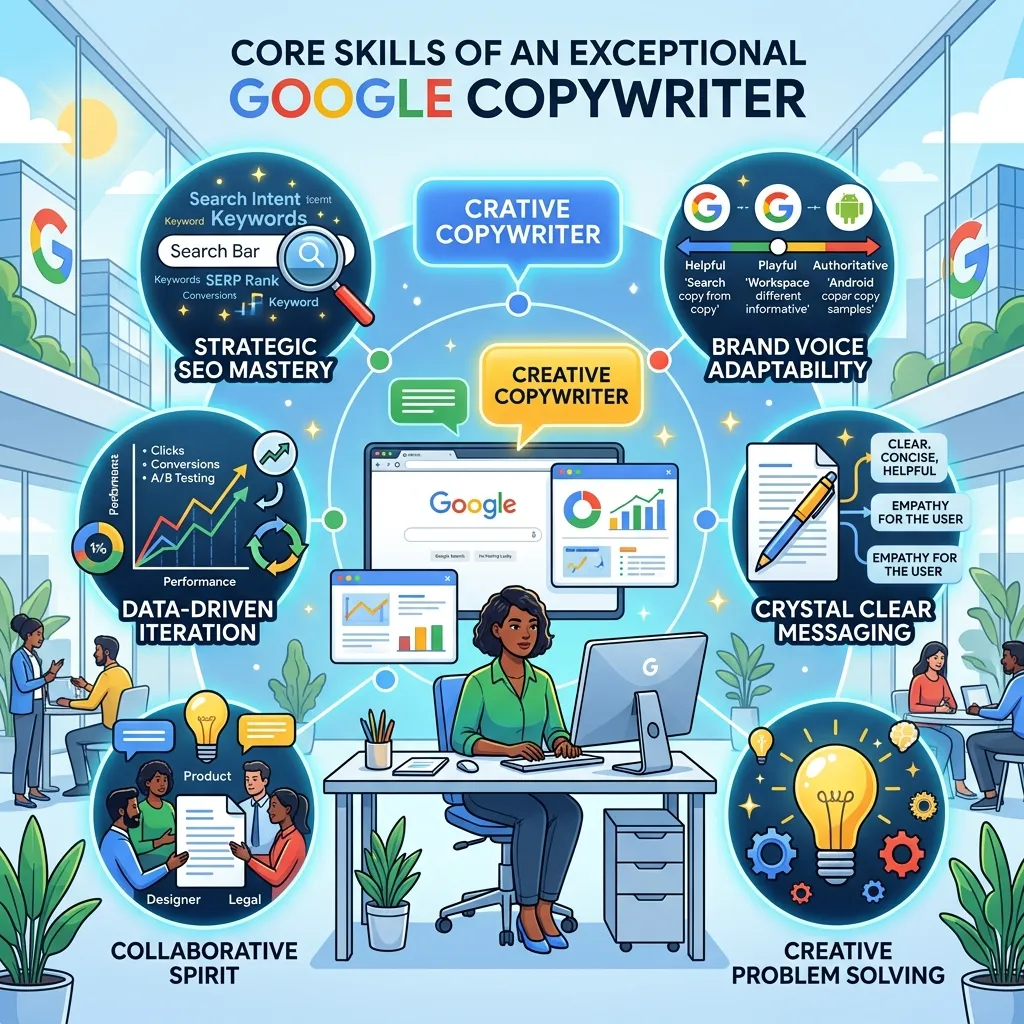
A Google copywriter isn’t just a wordsmith. The role demands a layered skill set that spans creative writing, technical knowledge, and analytical thinking.
How Does Keyword Integration Work Without Killing Readability?
At the foundation of any Google copywriting strategy is keyword research. A skilled Google copywriter doesn’t just stuff target phrases into content—they identify the terms your audience actually uses, map those terms to the right pages or ad groups, and weave them into copy that reads naturally.
Search intent is equally important. Someone searching “best running shoes for flat feet” wants product recommendations, not a history of orthotics. A Google copywriter reads intent signals and writes copy that satisfies what the user actually wants to find.
What Makes a Google Ad Headline Convert?
Google Ads gives you limited real estate: 30 characters per headline, 90 characters per description. Every word has to earn its place. High-converting ad copy typically includes a clear value proposition, a relevant keyword, and a specific call to action—all within those tight constraints.
The best Google copywriters treat each ad like a tiny persuasion machine. They understand which psychological triggers (urgency, specificity, social proof) work in which contexts, and they use A/B testing to validate their instincts with real data.
Why Is A/B Testing a Non-Negotiable Skill for Google Copywriters?
Copy intuition only gets you so far. A disciplined Google copywriter runs controlled experiments—testing one variable at a time, reading the results accurately, and iterating quickly. This data fluency is what separates professionals who consistently improve campaign performance from those who guess and hope.
How Does a Google Copywriter Impact Your Entire Digital Strategy?
Google Ads copywriting is the most visible part of the job, but a Google copywriter’s influence extends well beyond paid search.
How Does SEO Copywriting Improve Organic Search Visibility?
SEO copywriting targets organic rankings rather than paid placement. A Google copywriter working in this space writes blog posts, service pages, and landing pages that align with Google’s quality guidelines—prioritizing depth, accuracy, and user value over keyword density.
Google’s algorithm has grown increasingly sophisticated. Content that answers questions thoroughly, demonstrates expertise, and earns backlinks tends to outrank thin content stuffed with keywords. A Google copywriter who understands this shift can build your organic presence in a way that compounds over time.
What Role Does Local SEO Copywriting Play for Businesses with Physical Locations?
For businesses serving a specific geographic area, local SEO copywriting is critical. This includes optimizing Google My Business profiles, writing location-specific landing pages, and incorporating local keywords in a way that feels authentic rather than forced.
A well-optimized Google My Business profile—complete with accurate descriptions, category selections, and regular posts—can dramatically improve local visibility. A Google copywriter who specializes in local SEO understands how to structure this content so Google surfaces your business when nearby customers are searching.
What Are the Different Types of Google Copywriters and Their Specialties?
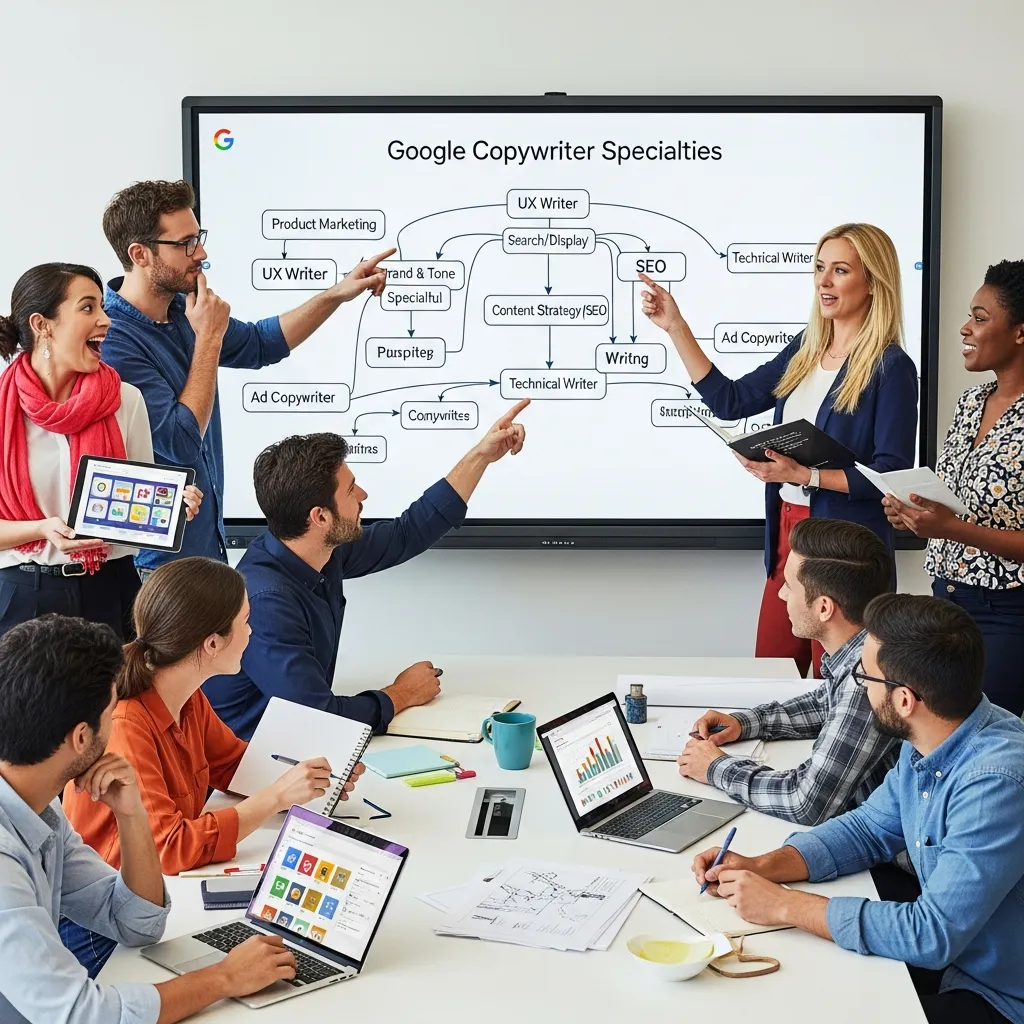
Not every Google copywriter does the same work. The field has developed clear specializations, and matching the right type of expert to your needs matters.
What Does a Copywriting Consultant Do Differently From a Staff Copywriter?
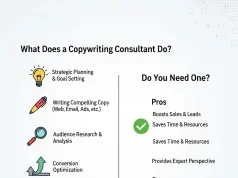
A copywriting consultant typically operates at a strategic level, auditing existing copy, identifying gaps, and developing frameworks for how messaging should work across campaigns and channels. Rather than writing every ad themselves, a copywriting consultant often guides internal teams or freelancers on best practices, brand voice, and keyword strategy. This role suits businesses that already have writing resources but lack strategic direction.
When Should You Hire a Technical Copywriter?
A technical copywriter specializes in making complex products or services understandable to a general audience. If you sell enterprise software, medical devices, or highly specialized B2B solutions, a technical copywriter can translate features and specifications into benefits-focused language that resonates with buyers who may not share your industry expertise. On Google Ads, this distinction matters enormously—vague copy for a sophisticated product rarely converts.
How Does a Small Business Copywriter Differ From an Enterprise-Level Specialist?
A small business copywriter tailors their approach to the unique constraints and opportunities facing local or independent businesses. This typically means tighter budgets, narrower geographic targeting, and a greater emphasis on building trust within a community. A small business copywriter understands how to create copy that feels personal and authentic rather than corporate—an advantage when competing against larger brands with more resources but less local credibility.
What Does a Creative Copywriter Bring to Google Campaigns?
A creative copywriter prioritizes originality and brand voice. While technical precision matters in Google Ads, creative copywriters know how to make ads memorable rather than merely functional. This is particularly valuable for brand awareness campaigns or businesses in saturated markets where standing out requires more than a relevant keyword and a discount offer.
What Makes Google Ads Copywriting a Standalone Discipline?
Google Ads copywriting—sometimes called PPC copywriting—focuses exclusively on paid search campaigns. This includes writing responsive search ads, display ads, Performance Max asset groups, and ad extensions. A specialist in Google Ads copywriting understands how Google’s ad auction works, how Quality Score affects cost-per-click, and how to structure ad groups so that copy and keywords align closely enough to drive relevance.
How Do You Measure the Success of a Google Copywriter?
Great copy is measurable. These are the KPIs that matter most.
Click-Through Rate (CTR): The percentage of people who see your ad or search result and click it. Higher CTR generally signals that your copy is relevant and compelling.
Conversion Rate: Of the people who click, how many complete the desired action? Copy that drives clicks but fails to convert suggests a mismatch between the ad’s promise and the landing page’s delivery.
Quality Score: Google’s internal rating (1–10) of how relevant your keywords, ads, and landing pages are to each other. A higher Quality Score typically reduces cost-per-click and improves ad placement.
Return on Ad Spend (ROAS): The revenue generated for every dollar spent on ads. ROAS ties copy performance directly to business outcomes, making it the clearest measure of a Google copywriter’s commercial impact.
How Do You Find and Hire the Right Google Copywriter?
Knowing what to look for makes the process significantly more efficient.
What Should You Look for in a Google Copywriter’s Portfolio?
Look for demonstrated results, not just samples. The best portfolios show before-and-after metrics: how CTR improved after a copy refresh, how a new landing page lifted conversion rates, or how an SEO blog post climbed from page three to page one. Writing samples alone can’t tell you whether someone’s work actually performs.
Freelancer or Agency: Which Is the Right Choice?
Freelance Google copywriters typically offer lower rates, greater flexibility, and a more direct working relationship. They work well for businesses with defined projects or specific campaigns. Agencies bring broader teams, structured processes, and the ability to scale across multiple campaigns simultaneously—but usually at a higher cost. The right choice depends on the volume of work, your internal capacity to manage a vendor relationship, and your budget.
What Are the Most Common Mistakes in Google Copywriting?
Even experienced marketers fall into predictable traps.
Keyword stuffing remains a problem despite decades of Google updates. Overloading ad copy or landing pages with target phrases produces awkward, unreadable text that Google penalizes and users ignore.
Generic ad copy is the silent budget killer. Ads that say “Quality service at affordable prices” tell customers nothing they can act on. Specificity converts.
Ignoring mobile users is increasingly costly. The majority of Google searches now happen on mobile devices, and copy that works on desktop often fails on smaller screens where truncation can strip out your best lines.
Weak or absent calls to action leave users unsure what to do next. Every piece of Google copy—whether it’s an ad, a meta description, or a blog post—should guide the reader toward a clear next step.
How Are AI Tools Changing the Role of a Google Copywriter?
AI writing tools have become genuine productivity multipliers for Google copywriters. Platforms like Jasper and Google’s own AI-assisted features within Performance Max can generate headline variations, suggest keyword-rich copy, and identify underperforming elements at scale. Tasks that once took hours now take minutes.
But AI doesn’t replace the human judgment at the center of great copywriting. Understanding why a particular audience reacts to a certain message, recognizing when a brand needs warmth rather than urgency, knowing how to handle a sensitive product category with care—these remain distinctly human capabilities. The most effective Google copywriters use AI as a tool for speed and scale while applying their own expertise to strategy, tone, and nuance.
Harnessing the Full Potential of a Google Copywriter
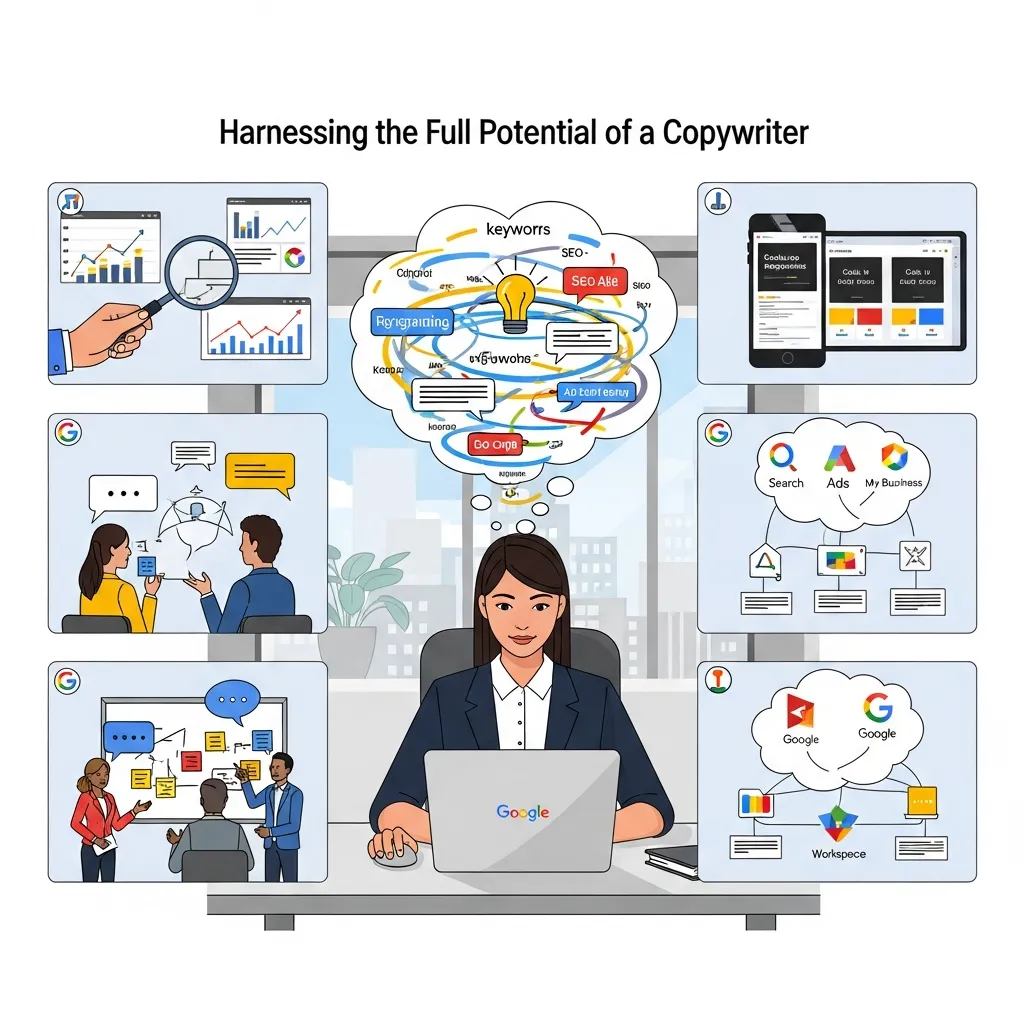
Effective copywriting on Google isn’t an expense—it’s a lever. The right Google copywriter can lower your cost-per-click, improve your ad Quality Scores, lift conversion rates on landing pages, and build organic traffic that reduces dependence on paid channels over time. Each of these outcomes compounds.
The businesses that treat Google copywriting as a strategic investment rather than an afterthought consistently outperform those that view it as a commodity. Start by auditing what you currently have: Are your ads specific and benefit-driven? Do your landing pages match your ad promises? Is your blog content answering real questions your customers are searching for?
If the answer to any of those is unclear, that’s exactly where a skilled Google copywriter can change your results.
Frequently Asked Questions
What exactly does a Google copywriter do?
A Google copywriter creates and optimizes copy for Google’s platforms—primarily Google Ads, SEO content, and Google My Business profiles. The role combines keyword research, persuasive writing, and performance analysis to drive clicks, conversions, and organic visibility.
How does a Google copywriter differ from a general copywriter?
A general copywriter works across a wide range of formats—brochures, emails, social media, and websites. A Google copywriter specializes specifically in the mechanics of Google’s ecosystem, including search intent, ad character limits, Quality Score optimization, and Google’s content quality guidelines.
Why is Google Ads copywriting so crucial for online businesses?
Google Ads copywriting directly determines whether your paid campaigns generate profitable returns. Weak ad copy wastes budget on clicks that don’t convert. Strong copy improves CTR, raises Quality Scores, reduces cost-per-click, and drives more conversions from the same spend.
Can a small business copywriter help improve local search rankings?
Yes. A small business copywriter with local SEO expertise can optimize Google My Business content, write location-targeted landing pages, and incorporate local search terms in a way that improves how Google surfaces your business for nearby customers.
What are the key elements of effective Google ad copy?
Effective Google ad copy includes a clear value proposition, a target keyword in the headline, specificity (avoid vague claims), and a direct call to action. Ad extensions—sitelinks, callouts, and structured snippets—give you additional real estate to reinforce your message.
How does SEO copywriting relate to Google’s search algorithms?
Google’s algorithms evaluate content quality based on factors including relevance, depth, expertise, and user engagement signals. SEO copywriting targets these factors by matching content to search intent, answering questions thoroughly, and structuring pages so both users and search engines can navigate them easily.
What kind of results can I expect from hiring a Google copywriter?
Results vary by industry, budget, and starting point, but common outcomes include improved CTR on ads, higher conversion rates on landing pages, better ad Quality Scores (which reduce cost-per-click), and stronger organic rankings for SEO content over time.
How often should I refresh my Google ad copy?
Most PPC specialists recommend reviewing ad performance monthly and running structured A/B tests continuously. Ad copy that once performed well can fatigue over time as audiences see it repeatedly. Fresh variations every 60–90 days is a reasonable baseline for active campaigns.
Is it better to hire a freelance Google copywriter or an agency?
A freelance Google copywriter is typically better suited for focused projects, smaller budgets, or businesses that want a direct, one-on-one working relationship. An agency offers more capacity, broader expertise, and structured processes—making them a stronger fit for larger, multi-channel campaigns requiring ongoing management.
What’s the role of a copywriting consultant in a Google strategy?
A copywriting consultant provides strategic direction rather than execution. They audit existing copy, develop messaging frameworks, and advise on how to align keywords, ads, and landing pages for maximum cohesion. This role is valuable for businesses that have writing resources but lack a coherent strategy.
How can a technical copywriter benefit my specialized business?
A technical copywriter translates complex features, specifications, or processes into clear, benefit-focused language that non-expert buyers can understand and act on. For businesses in fields like software, engineering, healthcare, or manufacturing, this skill is essential for creating Google Ads copy that resonates with a technically sophisticated—or general—audience.
What are the best practices for mobile-first Google copywriting?
Mobile-first copywriting means prioritizing your strongest headline and description content in the first positions, since mobile screens truncate longer ad copy. Landing pages linked from mobile ads should load quickly, display clearly on small screens, and feature prominent calls to action without requiring excessive scrolling.