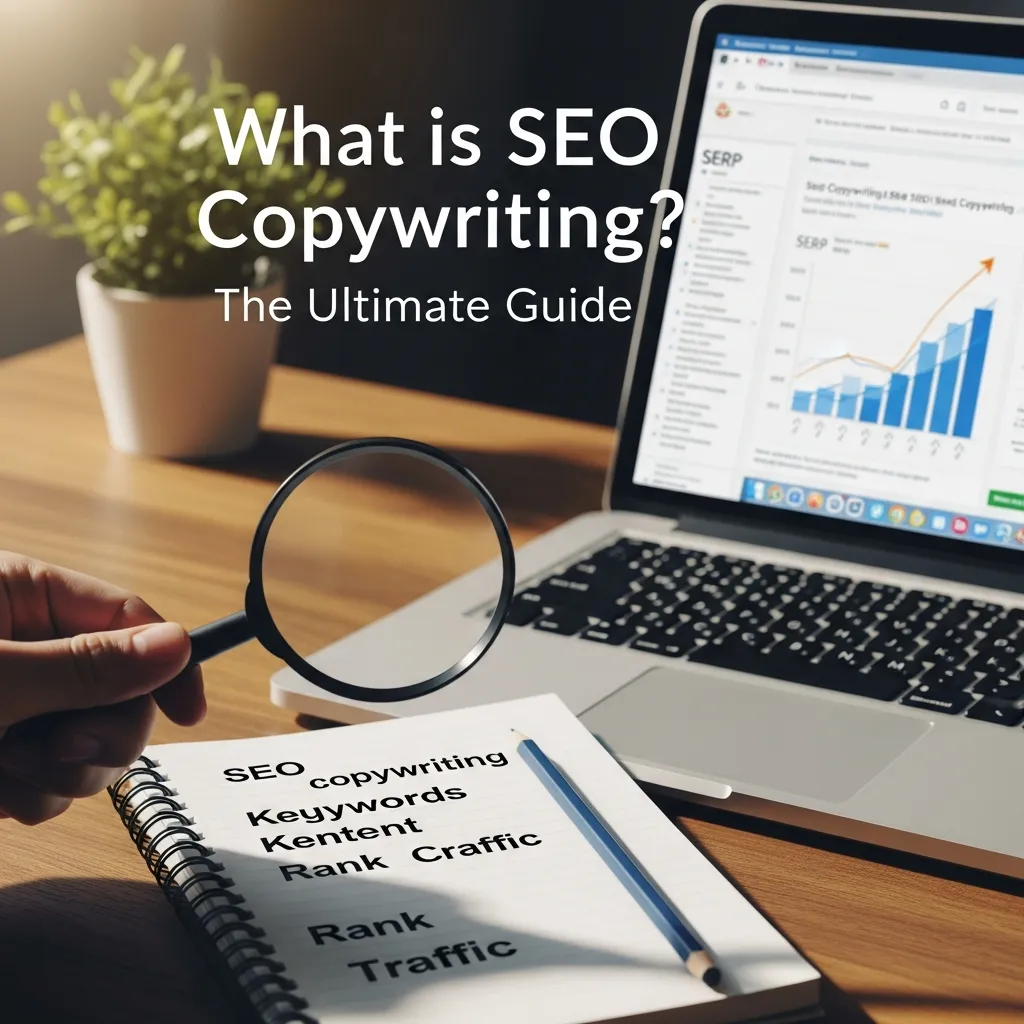
If you want to rank higher on search engines while keeping your human readers engaged, you need to understand what is SEO copywriting. At its core, this practice blends the art of persuasive writing with the science of search engine optimization. It ensures your content satisfies algorithms while answering the specific questions your audience is asking. By mastering this skill, businesses can drive consistent organic traffic and build lasting relationships with their customers.
Creating content for the internet requires a delicate balance. You must appeal to the complex algorithms that dictate search engine rankings, yet you cannot forget the real people reading your words. This intersection of creativity and data is the foundation of online success.
So, what is SEO copywriting? It is the process of writing highly engaging, useful, and persuasive content that naturally incorporates targeted keywords to rank well in search engine results pages (SERPs). Unlike traditional writing, which might only focus on brand messaging, SEO copywriting targets specific queries users type into Google.
Understanding what is SEO copywriting is crucial for survival online. Millions of blog posts and articles are published every single day. Standing out requires more than just good grammar. You need a strategic approach to ensure search engines understand your content and recommend it to users.
When you grasp what is SEO copywriting, you unlock the ability to generate free, recurring traffic. This continuous stream of visitors leads to more brand awareness, higher engagement, and ultimately, increased sales or conversions. Let us explore how you can master this essential marketing discipline.
The Core Components of Effective SEO Copywriting

To truly answer what is SEO copywriting, we must break it down into its foundational elements. Successful content relies on three main pillars: keyword strategy, content quality, and on-page optimization.
Keyword Research and Integration
Keywords act as the bridge between what users are searching for and the content you provide. Mastering keyword integration is the first step in learning what is SEO copywriting.
Understanding User Intent
Before writing a single word, you must understand why someone is searching for a particular phrase. Are they looking to buy a product, find an answer to a specific question, or navigate to a particular website? Aligning your content with user intent ensures your readers find exactly what they need, which signals to search engines that your page is valuable.
Long-Tail Keywords vs. Short-Tail Keywords
Short-tail keywords are broad and highly competitive (like “shoes”). Long-tail keywords are more specific phrases (like “best running shoes for flat feet”). When exploring what is SEO copywriting, you will find that long-tail keywords often convert better because they target users who are closer to making a decision.
Tools for Keyword Research
You do not have to guess what people are searching for. Tools like Ahrefs, SEMrush, and Google Keyword Planner provide insights into search volume, competition, and related phrases. These tools are indispensable for anyone learning what is SEO copywriting.
High-Quality Content Creation
Keywords get people to your page, but high-quality content keeps them there. The essence of what is SEO copywriting is providing genuine value.
Readability and Engagement
Your writing must be easy to read. Use short paragraphs, clear headings, and bullet points to break up large blocks of text. A conversational tone often works best, making complex topics accessible to a broader audience.
Addressing User Needs
Effective content directly answers the questions your audience asks. If someone searches for “what is SEO copywriting,” your article should provide a clear, comprehensive, and actionable answer right away.
Originality and Value Proposition
Search engines reward unique content. Do not just copy what your competitors are doing. Add your own insights, original research, or unique perspectives to make your content stand out.
On-Page SEO Elements
The technical side of your content helps search engines crawl and index your pages effectively.
Title Tags and Meta Descriptions
Your title tag and meta description are the first things users see in search results. They need to be catchy and include your primary keyword. This compels users to click on your link instead of a competitor’s.
Header Tags (H1, H2, H3)
Headers structure your content. They make it easier for readers to skim and help search engines understand the hierarchy of your information. Always include your main keywords in your H1 and occasionally in your H2 or H3 tags.
Image Optimization
Images make content more engaging. However, search engines cannot “see” images. You must use descriptive file names and alt text to explain what the image depicts, which also improves accessibility.
Internal and External Linking
Internal links connect your new post to other relevant pages on your site, keeping users engaged longer. External links to authoritative sources build credibility and show search engines your content is well-researched.
Beyond the Basics: Advanced SEO Copywriting Techniques
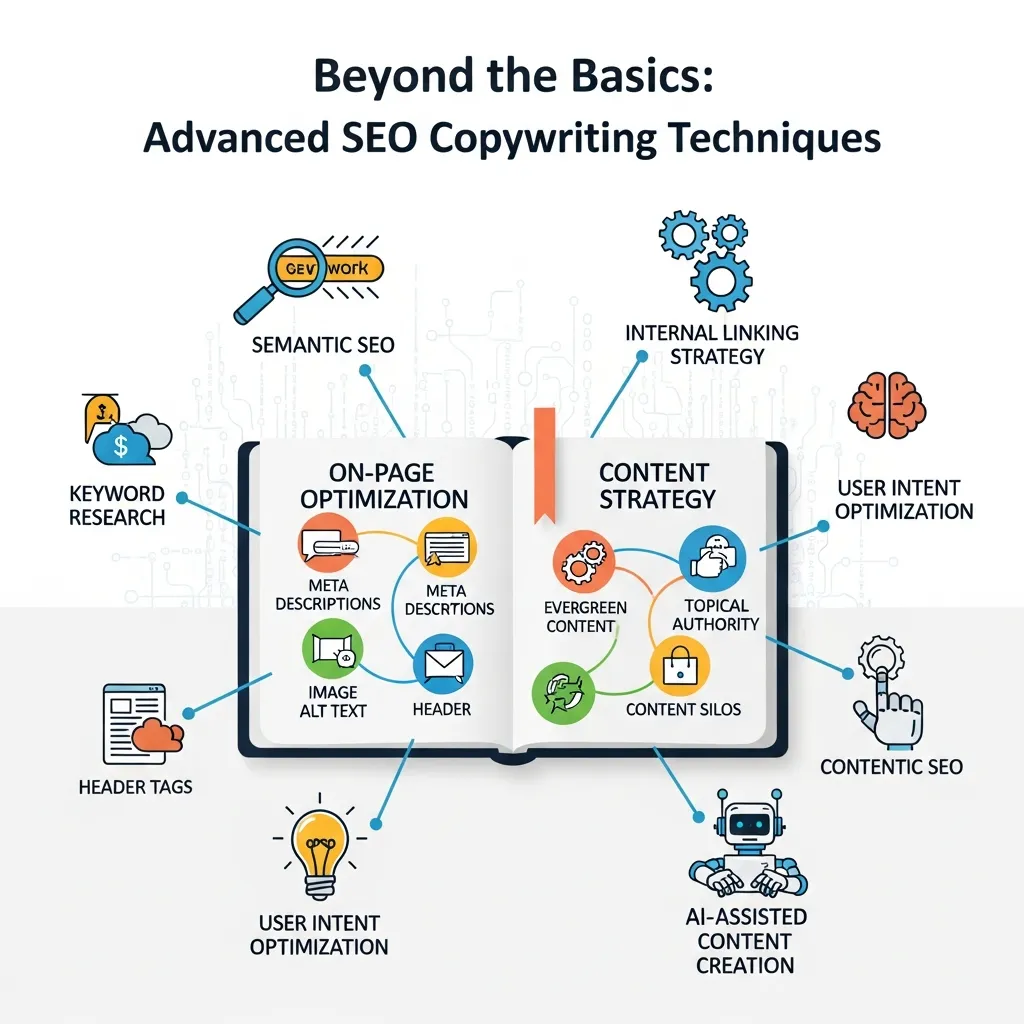
Once you understand the fundamentals of what is SEO copywriting, you can elevate your strategy by incorporating advanced methodologies.
Neuromarketing Copywriting: Tapping into the Reader’s Mind
Neuromarketing Copywriting involves applying principles of neuroscience to your writing to influence consumer behavior. By understanding how the brain processes information, you can craft messages that resonate on a subconscious level.
Psychological Triggers in Copy
Using concepts like scarcity, social proof, and authority can compel readers to take action. When someone sees that an offer is limited or that thousands of others have benefited from a service, their brain naturally assigns higher value to it.
Emotional Appeals and Persuasion
People make decisions based on emotion and justify them with logic. Neuromarketing Copywriting taps into emotions like joy, fear, or relief, creating a powerful connection between the reader and your brand.
Email Copywriting Mastery: Driving Engagement Beyond the Page
While understanding what is SEO copywriting focuses heavily on web pages, driving traffic from other channels is equally important. Email Copywriting Mastery allows you to bring loyal readers back to your optimized content.
Crafting Compelling Subject Lines
The subject line is the gatekeeper of your email. Using curiosity, urgency, or direct benefits encourages subscribers to open your message and click through to your SEO-optimized blog posts.
Nurturing Leads with SEO-Optimized Email Content
Email Copywriting Mastery involves sending consistent, valuable content that aligns with the search intent of your audience. By linking back to your pillar pages, you drive targeted traffic that boosts your overall engagement metrics.
AI Copywriting Tools: Enhancing Efficiency and Scale
The landscape of content creation is changing rapidly due to technology. Leveraging AI Copywriting Tools can help you scale your efforts without sacrificing quality.
How AI Can Assist with Content Generation
AI Copywriting Tools can help you brainstorm outlines, generate meta descriptions, and overcome writer’s block. They are excellent for handling the repetitive aspects of content creation, allowing you to focus on strategy and voice.
The Role of Human Oversight in AI Copywriting
While AI Copywriting Tools are powerful, they cannot replace the human touch. They lack real-world experience and deep empathy. Human oversight is necessary to edit for tone, ensure factual accuracy, and verify that the final piece truly answers what is SEO copywriting.
Measuring the Success of Your SEO Copywriting Efforts
You cannot improve what you do not measure. Tracking the right metrics proves the return on investment of your content strategy.
Key Performance Indicators (KPIs)
To know if you have successfully implemented what is SEO copywriting, monitor these metrics:
Organic Traffic
This measures the number of visitors coming to your site directly from search engines. A steady increase indicates your keywords and content are performing well.
Keyword Rankings
Track where your pages rank for target phrases. Moving from page two to page one for “what is SEO copywriting” can drastically increase your visibility.
Conversion Rates
Traffic is useless if it does not lead to action. Track how many visitors sign up for your newsletter, download a guide, or make a purchase after reading your content.
Analytics and Reporting Tools
Google Analytics and Google Search Console are essential tools for monitoring your success. They show you exactly how users interact with your site, which queries bring them there, and where you might be losing their attention.
Common Mistakes to Avoid in SEO Copywriting
Even experienced writers can stumble. Avoid these pitfalls when practicing what is SEO copywriting.
Keyword Stuffing
Forcing your keyword into every sentence makes your writing unreadable and can trigger search engine penalties. Write naturally. If you are thoroughly answering what is SEO copywriting, the relevant terms will appear organically.
Duplicate Content
Publishing the same content across multiple pages confuses search engines. They will not know which page to rank, which often results in none of them performing well. Always strive for unique, original writing.
Ignoring Mobile-First Indexing
Most users browse the web on their phones. If your site is hard to read on a mobile device, users will leave immediately. Search engines penalize sites that do not offer a seamless mobile experience.
The Future of SEO Copywriting: Adapting to Algorithm Changes

Search engines constantly update their algorithms to provide better results for users. The future of what is SEO copywriting will likely lean heavily into semantic search, voice search, and helpful content updates. Instead of obsessing over exact-match keywords, focus on topic clusters and answering questions thoroughly. Adapting to these changes ensures your content remains relevant for years to come.
Mastering the Art and Science of SEO Copywriting
Learning what is SEO copywriting is a continuous journey. It requires a deep understanding of your audience, a commitment to high-quality writing, and an ongoing education in search engine mechanics. By integrating advanced strategies like Neuromarketing Copywriting, utilizing AI Copywriting Tools efficiently, and avoiding common pitfalls, you can create content that ranks highly and resonates deeply. Start applying these principles today, and watch your organic visibility grow.
Frequently Asked Questions (FAQs)
1. What is the main goal of SEO copywriting?
The main goal is to create compelling, useful content that ranks high in search engine results while simultaneously engaging the reader and encouraging them to take a specific action.
2. How does keyword density impact SEO copywriting?
While incorporating keywords is essential, keyword density is less important than natural integration. Overusing a keyword (keyword stuffing) can harm your rankings. Aim for a natural flow.
3. Can AI truly replace human SEO copywriters?
No. While AI Copywriting Tools are excellent for generating ideas and drafting content quickly, they lack the empathy, strategic thinking, and brand voice consistency that a human writer provides.
4. What is the difference between SEO copywriting and traditional copywriting?
Traditional copywriting focuses primarily on persuasion and brand messaging. SEO copywriting does this while also optimizing the text for search engine algorithms by targeting specific search queries.
5. How often should I update my SEO copywriting?
You should review and update your content every 6 to 12 months. Refreshing outdated statistics, adding new insights, and checking links helps maintain or improve your search rankings.
6. What role do meta descriptions play in SEO copywriting?
Meta descriptions act as a pitch to the searcher. While they do not directly impact rankings, a well-written meta description increases click-through rates, bringing more traffic to your site.
7. How can I find relevant keywords for my content?
Use SEO tools like Google Keyword Planner, Ahrefs, or SEMrush. You can also look at Google’s “People also ask” section to find common questions related to your topic.
8. Is it better to write for search engines or for users in SEO copywriting?
Always write for users first. Search engines are designed to reward content that provides the best user experience. If your human readers are happy, the algorithms will follow.
9. What are some common SEO copywriting tools?
Popular tools include Grammarly for readability, Clearscope or SurferSEO for content optimization, and AI Copywriting Tools like Jasper or ChatGPT for drafting assistance.
10. How does mobile optimization affect SEO copywriting?
Since Google uses mobile-first indexing, your text must be highly readable on small screens. Use short paragraphs, clear fonts, and plenty of white space.
11. What is “Neuromarketing Copywriting” in the context of SEO?
It is the practice of applying psychological principles and neuroscience to your writing to influence reader behavior, increase engagement, and drive higher conversion rates from your organic traffic.
12. How can “Email Copywriting Mastery” enhance SEO efforts?
Mastering email copy allows you to drive targeted, engaged traffic back to your website. High traffic and strong engagement metrics signal to search engines that your content is valuable.