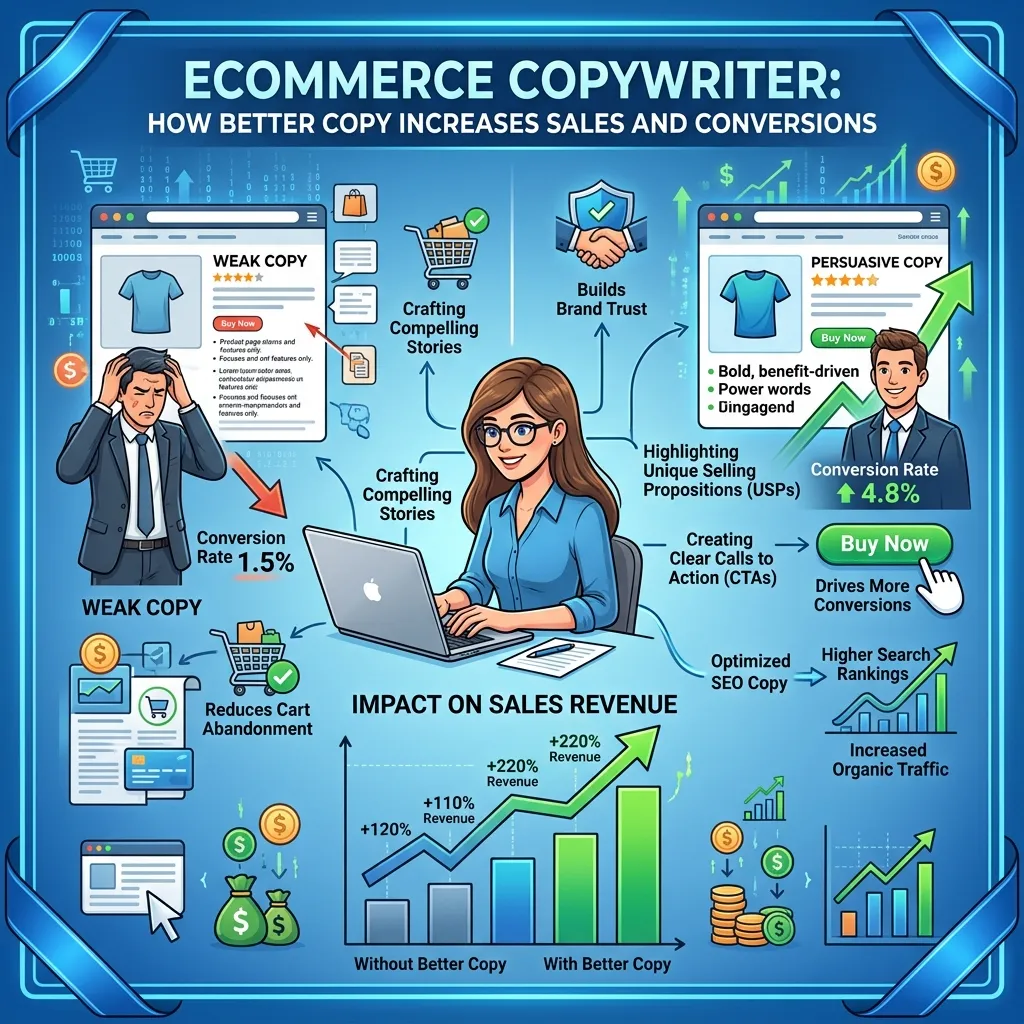
An ecommerce copywriter helps online stores turn browsing into buying by combining psychology, clarity, and conversion-focused messaging. In ecommerce, every word matters because shoppers make fast judgments. A headline can create trust, a product description can reduce doubt, and a call to action can turn attention into revenue. That is why an ecommerce copywriter is more than a writer. The role blends research, empathy, strategy, and conversion thinking into one practical skill set.
A strong ecommerce copywriter understands that online buyers are not looking for information alone. They are looking for reasons to feel safe, excited, and certain. When a page answers objections before the buyer asks them, friction drops. When a product page speaks in the customer’s language, the offer feels relevant. When the overall message feels consistent, the buyer feels guided instead of pushed. That is the real power of an ecommerce copywriter.
An ecommerce copywriter also supports the full customer journey, not just the product page. From homepage copy to email flows, from category pages to abandoned cart messages, the words must work together. Each line should help the shopper move from curiosity to confidence. In that sense, an ecommerce copywriter is part marketer, part psychologist, and part sales strategist, always focused on making the customer’s next step feel easier.
What an ecommerce copywriter actually does
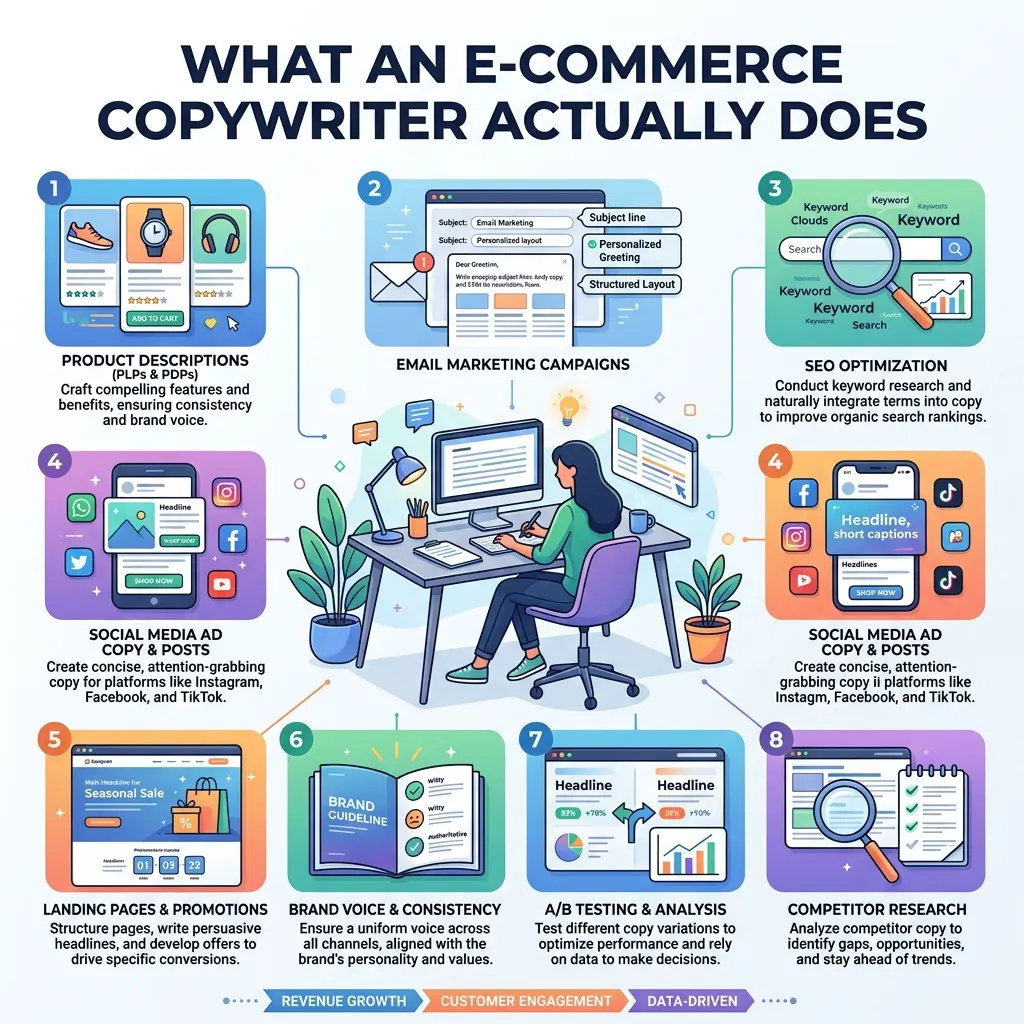
A good ecommerce copywriter starts by studying the buyer’s mindset. Shoppers compare options quickly, scan for proof, and look for simple reasons to trust one store over another. A writer turns that behavior into advantage by using clear language, strong hierarchy, and customer-centered benefits. Instead of forcing attention, the writing earns it. Instead of listing features in a flat way, it explains how the product changes the buyer’s day. That shift in tone can lift conversion because the message feels useful rather than noisy. An ecommerce copywriter knows that the right sentence can do more than decorate a page; it can remove hesitation and move someone one step closer to purchase.
Every effective ecommerce copywriter treats product copy as a decision-making tool. A buyer does not need more fluff. A buyer needs certainty. That is why a writer writes with precision, making the value of the product obvious within seconds. The copy should answer who the product is for, what problem it solves, and why it matters now. When that structure is clear, shoppers can imagine ownership more easily. An ecommerce copywriter also respects mobile reading habits, where short paragraphs, scannable benefits, and direct phrasing outperform dense blocks of text. The goal is not to sound clever. The goal is to make buying feel easy and sensible.
A skilled ecommerce copywriter understands that emotion and logic work together in ecommerce. The customer may start with a practical need, but the final click often depends on comfort, confidence, and desire. A writer uses that reality to shape headlines, subheads, bullets, and calls to action that feel reassuring. The copy should not exaggerate. It should translate features into outcomes people care about. That is why the best ecommerce copywriter often sounds simple on the surface but strategic underneath. The language creates a bridge between product and person, and that bridge is where conversion usually happens.
Why research matters so much
Research is the foundation of every strong ecommerce copywriter. Before writing, the writer should learn the audience’s pain points, objections, terminology, and buying triggers. An ecommerce copywriter who skips research often produces copy that sounds generic, while a researched message feels specific and believable. Good research means reading reviews, analyzing competitors, checking search intent, and listening to customer support language. That information tells the writer what buyers actually worry about. Once those concerns are clear, the copy can speak directly to them. An ecommerce copywriter is valuable because it turns raw customer insight into persuasive structure without sounding forced.
Trust is one of the biggest tasks for any ecommerce copywriter. Online shoppers cannot touch the product, ask a sales rep in person, or inspect quality directly. They rely on words, visuals, and signals of credibility. An ecommerce copywriter helps build that trust through clarity, consistency, and proof. This may include stronger benefit statements, specific product details, honest limitations, and language that feels human instead of robotic. The best copy does not overpromise. It shows competence. It makes the buyer feel that the brand understands the product and respects the customer’s time. That emotional effect can be as important as the product itself.
The homepage is often the first place where an ecommerce copywriter can make an impression. It must tell visitors what the store sells, who it serves, and why the brand matters in a few seconds. An ecommerce copywriter approaches the homepage like a guided entry point rather than a brochure. The headline should be clear, the supporting line should reduce confusion, and the pathway to products should feel obvious. If the homepage tries to say too much, it loses momentum. An ecommerce copywriter knows that clarity beats cleverness when a stranger is deciding whether to stay. That is why homepage copy is strategic, not decorative.
Product pages, category pages, and checkout
Product descriptions are another critical area for an ecommerce copywriter. A description should do more than repeat the product name. It should turn product facts into customer value. A strong ecommerce copywriter explains what the item does, how it feels to use, and what problem it helps solve. It also uses sensory detail carefully, because online shoppers often need to imagine the experience before buying. The most effective descriptions balance detail with readability. They create confidence without overwhelming the reader. An ecommerce copywriter knows that every description is a chance to move a customer closer to a decision.
An ecommerce copywriter also helps with category pages, which are often underestimated. Category pages matter because they organize choice, support SEO, and shape the buying journey. When the copy is useful, shoppers can navigate faster and feel less lost. An ecommerce copywriter writes category intro text that explains the range of products and helps users understand what to look for. That small layer of guidance can improve both usability and search visibility. The result is a page that serves the customer first and the business second, which is exactly how good ecommerce content should work.
Calls to action are a small but powerful job for an ecommerce copywriter. The right button text or section ending can create momentum, while the wrong one can feel vague or weak. An ecommerce copywriter writes calls to action that match the stage of the customer journey. For a new visitor, the copy may need more reassurance. For a ready buyer, it may need more urgency. In both cases, the language should feel natural, not pushy. A well-written call to action reduces mental effort and tells the shopper what happens next. That sense of clarity often increases clicks and conversions.
The checkout flow is another critical moment where an ecommerce copywriter can reduce friction. Even small phrases on buttons, trust badges, shipping notes, and payment prompts can shape how safe the customer feels. If the copy is vague, doubt rises. If the copy is clear and reassuring, the buyer moves forward with less resistance. An ecommerce copywriter should think about every word on the path to payment. This is not just design work. It is decision support. A good checkout message can quietly remove anxiety and protect conversions.
Email, SEO, and tone
Email is another place where an ecommerce copywriter adds value. Ecommerce email flows work best when they feel timely, relevant, and human. An ecommerce copywriter can improve welcome series, abandoned cart emails, post-purchase follow-ups, and win-back campaigns by adjusting tone and structure. The best emails do not just sell. They support the relationship. They remind the customer why the brand exists and why the offer matters. When a message feels personal, the reader is more likely to engage. An ecommerce copywriter understands that inbox attention is earned through usefulness, not just subject lines.
An ecommerce copywriter must also think about search intent. Many store pages need to attract both search engines and real buyers, which means the copy must be optimized without sounding mechanical. An ecommerce copywriter balances keyword placement, readability, and persuasive flow so the page can rank and convert. Search visibility is important, but visibility alone does not pay the bills. The page must persuade the visitor once they arrive. This is where technical SEO and conversion copy meet. A good ecommerce copywriter understands that ranking is only the beginning; the copy still has to win the customer’s trust.
Tone matters in ecommerce more than many businesses realize, and an ecommerce copywriter shapes tone with purpose. A luxury brand may need polished language, while a playful brand may need a lighter voice. A technical product may need precision, while a lifestyle product may need warmth. An ecommerce copywriter studies the brand and the audience to find the right balance. If the tone is too formal, the page can feel distant. If it is too casual, the page can lose authority. A strong ecommerce copywriter creates a voice that feels aligned with the customer’s expectations and the product’s promise.
Another strength of an ecommerce copywriter is simplifying complex products. Many ecommerce products have technical features, but customers usually care about outcomes. An ecommerce copywriter translates complicated details into clear benefits without losing accuracy. This is especially useful for skincare, electronics, software, supplements, tools, and specialty goods. Buyers want enough information to feel informed, but not so much that they feel overwhelmed. An ecommerce copywriter acts as the interpreter between product teams and customers. That translation work is one reason conversion copy is so valuable in ecommerce.
Pages that influence buying behavior
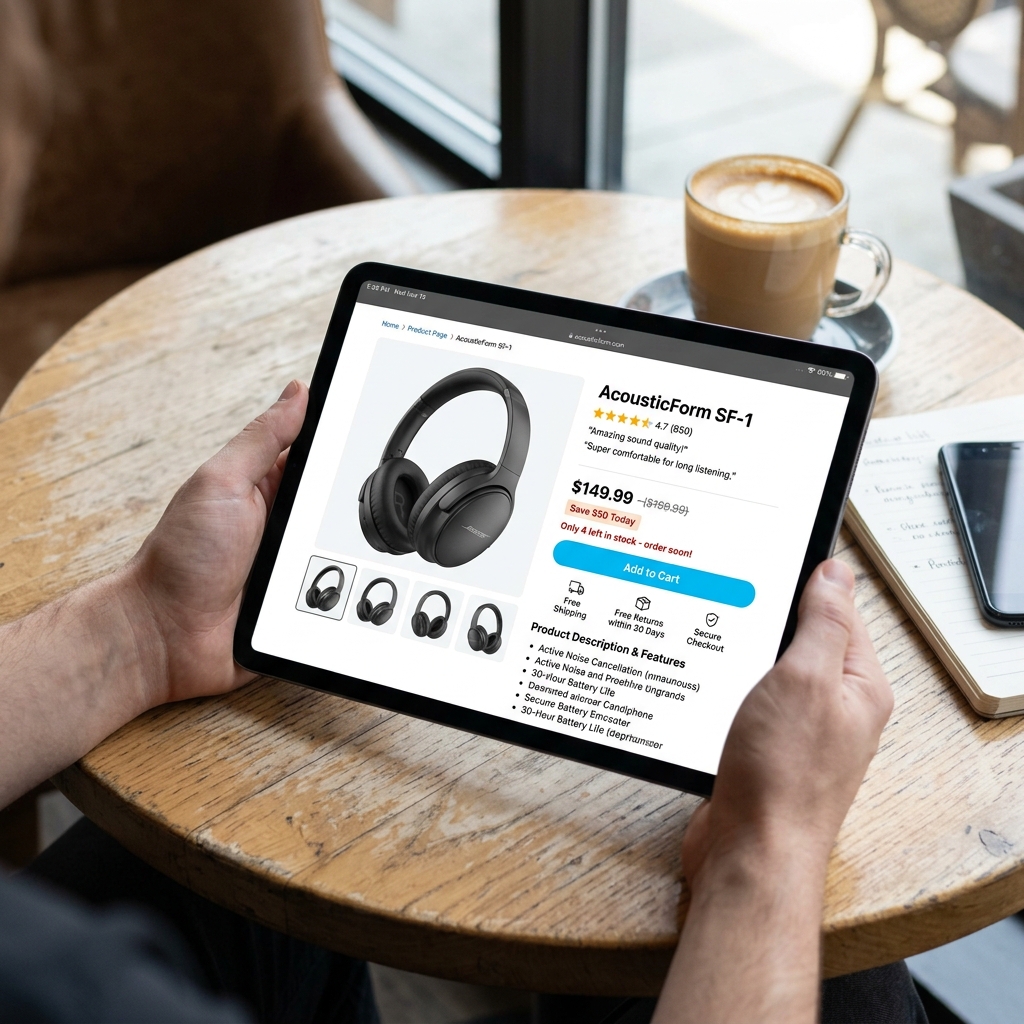
An ecommerce copywriter often supports landing pages that sit between ads and purchases. Landing pages work best when they have one clear goal and a clean message hierarchy. An ecommerce copywriter removes distractions, sharpens the value proposition, and builds momentum toward the next step. The messaging should answer the customer’s biggest question first: why should I care? After that, it should remove objections and reinforce proof. A landing page can fail even with good traffic if the copy does not guide attention properly. The ecommerce copywriter helps make sure the page earns the click it receives.
Customer reviews also matter to an ecommerce copywriter. While reviews are not written by the copywriter, they shape the message strategy. An ecommerce copywriter reads reviews to find recurring language, emotional triggers, and common concerns. That language often reveals exactly what should appear in the copy. If customers keep praising comfort, speed, or durability, the copy should emphasize those points in a natural way. If customers keep asking about size or fit, the page should address those concerns directly. An ecommerce copywriter uses the customer’s own words because real language builds stronger trust than marketing jargon.
An ecommerce copywriter knows that confusion kills conversions. If the shopper has to work too hard to understand the offer, many will leave. That is why structure is as important as sentence quality. An ecommerce copywriter arranges content so the eye moves naturally from headline to benefit to proof to action. White space, short paragraphs, and clear subheads all support this behavior. The message becomes easier to scan and easier to believe. An ecommerce copywriter reduces cognitive load, and lower cognitive load usually improves buying confidence.
Good ecommerce content also depends on objection handling, which is a core skill for an ecommerce copywriter. Buyers may worry about price, shipping, returns, durability, or whether the product fits their need. An ecommerce copywriter does not ignore those fears. Instead, the copy addresses them in a calm and helpful way. This can happen in a FAQ section, a product description, or a comparison block. When objections are handled early, the customer feels respected. An ecommerce copywriter makes the buyer feel understood, and that feeling often becomes a conversion advantage.
Storytelling, consistency, and growth
An ecommerce copywriter should also understand the role of storytelling in ecommerce. Storytelling does not mean writing long essays on every page. It means showing the problem, the promise, and the transformation in a way that feels real. The customer should be able to see themselves in the story. That emotional connection helps the product feel relevant. An ecommerce copywriter uses small story elements in headlines, testimonials, and benefit copy to create that sense of movement. When the shopper feels part of the story, the brand becomes more memorable.
One overlooked responsibility of an ecommerce copywriter is consistency across pages. If the homepage sounds premium, the product page should not sound cheap. If the ad promises simplicity, the landing page should not become complicated. An ecommerce copywriter keeps the language aligned so the customer experiences one clear brand voice. That consistency makes the store feel more trustworthy. It also helps the brand look organized and professional. A strong ecommerce copywriter knows that scattered messaging creates doubt, while consistent messaging creates confidence.
An ecommerce copywriter can improve average order value by using smart copy around bundles, upsells, and cross-sells. These areas work best when the language feels helpful rather than aggressive. An ecommerce copywriter explains why related items belong together and how they improve the customer experience. That turns an extra offer into a sensible choice. The shopper should feel guided, not pressured. The right wording can make add-ons feel like thoughtful recommendations. An ecommerce copywriter understands that more revenue often comes from better timing and better framing, not louder sales language.
Another important moment is the path from ad to landing page. An ecommerce copywriter must respect that connection because a promise made in one place should be fulfilled in the next. If the ad promise and the page message do not match, the customer feels a disconnect. An ecommerce copywriter helps maintain continuity so the shopper feels like the experience is one connected conversation. Matching language, promise, and offer can improve quality and trust. The user should never feel tricked. An ecommerce copywriter aligns the message from ad to landing page to checkout, which makes the whole journey stronger.
An ecommerce copywriter can even improve retention after the sale. Post-purchase emails, product care instructions, refill reminders, and review requests all depend on tone and timing. The customer should feel appreciated, not exploited. An ecommerce copywriter writes these messages so they reinforce satisfaction and encourage return visits. Retention copy may be quieter than sales copy, but it is often more profitable over time. A brand that communicates well after the purchase often earns more loyalty and more repeat orders.
How the job connects to other kinds of writing
An ecommerce copywriter often overlaps with broader content work, but the priorities are different. Blog Copywriting usually focuses on education, discoverability, and long-form authority, while ecommerce copy must push the shopper toward a purchase with less friction and stronger product framing. A writer who understands both can move more easily between traffic-building content and conversion-focused sales pages.
Social Media Copywriting also plays a supporting role because the first contact point is often a short hook, caption, or ad line. Those messages should feel quick, relevant, and emotionally resonant, then lead the user into a more detailed product experience. That connection between short-form attention and purchase intent is where a skilled writer adds real value.
There are also cases where the negatives of emotional branding show up clearly. If a store leans too hard on sentiment without enough product substance, customers may feel manipulated or disappointed. A careful ecommerce copywriter avoids that trap by pairing emotional appeal with concrete proof, clear benefits, and honest claims.
For bigger teams, Agency Copywriting often becomes the model that defines how multiple brands or accounts are handled at scale. The workflow may include research, positioning, revisions, and performance review. A strong ecommerce copywriter can fit into that environment because the job requires both creative thinking and repeatable systems. When done well, the copy feels custom, even when the process is structured.
Practical Traits of a Strong Ecommerce Copywriter
A skilled ecommerce copywriter understands audience segmentation. Different shoppers have different buying motivations, even for the same product. Some care about price, others focus on quality, convenience, or status. By tailoring the message to each audience without changing the brand’s identity, the copy feels more relevant and persuasive. Targeted messaging consistently performs better than broad, generic communication.
This role also requires close collaboration with product teams, designers, and marketers. Strong communication ensures every page reflects the campaign goals, brand voice, and customer expectations. When everyone works with the same strategy, the shopping experience becomes more consistent and trustworthy.
Ethics are just as important as persuasion. Effective ecommerce copy should avoid misleading claims, fake urgency, or emotional manipulation. Honest messaging builds long-term trust, protects the brand’s reputation, and encourages repeat customers.
Understanding brand positioning is another essential skill. Every store has a unique identity, whether it competes on value, quality, luxury, or convenience. The writing should reflect that positioning through the right vocabulary, tone, proof points, and customer benefits.
Formatting also plays a major role. Clear headings, bullet points, short paragraphs, and scannable layouts make information easier to process, especially on mobile devices. Better readability reduces friction and helps customers make faster buying decisions.
How an Ecommerce Copywriter Adapts Across Categories

Every industry requires a different writing approach. Fashion products need style-focused messaging, electronics require clarity and confidence, beauty products benefit from sensory descriptions, while home goods often emphasize comfort and practicality. A professional writer adjusts the tone and structure based on the product category while maintaining strong conversion principles.
Consistency across the customer journey is equally important. The message in a paid advertisement should match the landing page, product page, and checkout experience. When every touchpoint delivers the same promise, customers feel more confident and are less likely to abandon their purchase.
The work also continues after the sale. Post-purchase emails, product care guides, refill reminders, and review requests strengthen customer relationships when written with a helpful and appreciative tone. Retention-focused messaging encourages repeat purchases and long-term loyalty.
Conclusion
A strong ecommerce copywriter does far more than describe products. The role combines customer psychology, SEO, branding, and conversion strategy to create shopping experiences that are clear, trustworthy, and persuasive. When businesses communicate with clarity, honesty, and consistency, customers make decisions with greater confidence. Great copy not only increases sales but also builds stronger relationships that support long-term business growth.
FAQs
1. What does an ecommerce copywriter do?
An ecommerce copywriter creates product pages, category pages, landing pages, ads, emails, and other store content that helps shoppers understand offers and make buying decisions.
2. Why is ecommerce copywriting important?
It helps reduce uncertainty, build trust, and guide online shoppers toward making confident purchasing decisions.
3. Is an ecommerce copywriter different from a content writer?
Yes. A content writer mainly focuses on education and brand awareness, while an ecommerce copywriter specializes in persuasive, conversion-focused messaging.
4. What skills should this professional have?
They should understand buyer psychology, SEO, product messaging, tone of voice, objection handling, and conversion optimization.
5. Can ecommerce copywriting help SEO?
Yes. Well-optimized copy improves search visibility, user engagement, page relevance, and overall conversion performance.
6. How does an ecommerce copywriter improve product pages?
By highlighting customer benefits, addressing objections, writing compelling calls to action, and making information easy to scan.
7. Does ecommerce copywriting use emotion?
Yes. It uses emotion to build trust, create desire, reduce hesitation, and encourage action while keeping the message honest and customer-focused.
8. What is the biggest mistake in ecommerce copy?
Using generic messaging that fails to address customer needs or explain why the product is worth buying.
9. Can one writer handle ecommerce and social copy?
Yes. A skilled writer can create both, adapting the message to each platform while maintaining a consistent brand voice.
10. How can a business find a good ecommerce copywriter?
Look for an ecommerce copywriter with strong research skills, conversion expertise, SEO knowledge, and a deep understanding of customer psychology.