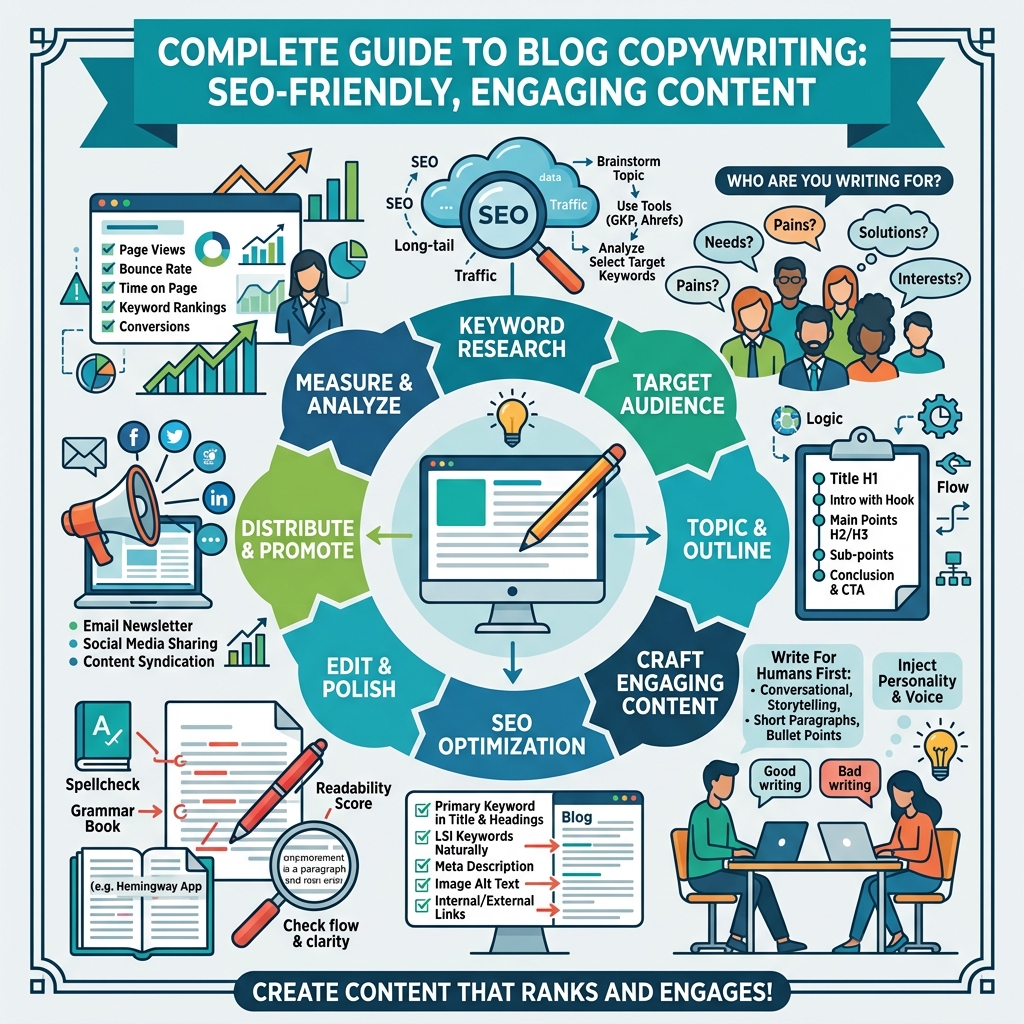
Blog copywriting helps brands turn attention into action by combining clear messaging, audience psychology, search-friendly structure, and trust-building language that supports readability, engagement, and conversion.
What Blog Copywriting Really Does
Blog copywriting is the craft of turning an idea into writing that informs, persuades, and moves a reader toward a meaningful next step. It is not only about sounding polished. It is about shaping a message so the right person feels understood quickly. Good blog copywriting respects attention, answers questions early, and leads readers forward without friction.
The strongest blog copywriting is built on clarity. When a reader lands on a page, they are usually scanning for signs that the article is worth their time. They want usefulness, relevance, and a sense that the writer understands their problem. That is why blog copywriting must be intentional from the first sentence to the last.
Many people assume blog copywriting is only about ranking in search engines. Search matters, but search is only part of the job. The deeper purpose is connection. A well-written article keeps a reader moving because the ideas feel organized and the tone feels trustworthy. That combination helps content perform better with both people and algorithms.
Why Blog Copywriting Matters for Modern Brands

blog copywriting matters because the internet is crowded with information that sounds similar. Readers see endless headlines, repeated claims, and shallow advice. To stand out, a brand needs writing that is specific, useful, and human. This is where strategy becomes more important than style alone.
When a brand treats blog copywriting as a business asset, every article has a role. Some posts attract new readers. Some build trust. Some answer objections. Some support product discovery. Strong blog copywriting can do all of these things when it is guided by audience intent instead of random topic ideas.
One reason blog copywriting works so well is that it meets people where they already are. Search engines bring readers in with a question. Social feeds bring readers in with curiosity. Internal links bring readers deeper into a brand experience. Because the reader is already looking for something, blog copywriting can guide them with less resistance than colder forms of outreach.
The Psychology Behind Effective Blog Writing
The best blog copywriting understands human behavior. People do not read in a perfect line from top to bottom. They skim, compare, pause, and look for emotional safety before they commit attention. That means the writing must reduce uncertainty fast.
A strong opening helps the reader relax. Clear subheadings help the mind organize information. Examples help the reader imagine the idea in real life. And a steady tone helps the article feel credible. All of these details are part of blog copywriting because they shape how the message is received.
Trust is one of the biggest psychological drivers in blog copywriting. If the writing feels vague, exaggerated, or robotic, readers leave. If it feels grounded, useful, and easy to follow, readers stay longer. Longer attention often leads to stronger engagement, more internal clicks, and a better chance of conversion later.
Core Elements of Blog Copywriting
Every piece of blog copywriting should begin with one clear purpose. The purpose might be to educate, compare, persuade, or support a purchase decision. When the purpose is clear, the article becomes easier to structure and easier for the reader to understand.
Next comes audience understanding. blog copywriting should reflect the reader’s level of awareness. A beginner needs simple explanations. A more advanced reader wants deeper nuance. When the content matches the reader’s stage, it feels relevant instead of generic.
Then comes message hierarchy. The most important idea should appear early. Supporting details should follow in a logical order. This structure keeps blog copywriting easy to scan while still rewarding deeper reading. A clean hierarchy also makes it easier for search engines to interpret the page.
How Search Intent Shapes the Article
Effective blog copywriting begins with intent, not with sentences. If a person searches for a topic, they are signaling a need. That need might be informational, commercial, or navigational. The article should answer that need directly rather than wandering into unrelated points.
Informational intent is especially important for educational articles. Readers want answers, explanations, and examples. blog copywriting for informational intent should avoid unnecessary hype and focus on usefulness. The more precisely the article answers the underlying question, the more likely it is to satisfy the reader.
A good topic outline starts with the biggest question, then moves into supporting questions, then closes with action-oriented guidance. This mirrors how people think. It also helps blog copywriting maintain momentum because each section naturally leads into the next.
Writing for People First, Then Search Engines
The most effective blog copywriting sounds natural. It should read like a helpful human wrote it for a real person with a real problem. Search optimization matters, but it should never make the writing feel forced. Readers can sense when a sentence was written for a machine instead of a person.
That is why keyword placement must be handled carefully. Keywords should appear where they fit the meaning of the paragraph, not where they damage the flow. When blog copywriting is natural, readers stay engaged longer and are more likely to trust the message.
This is also why sentence variety matters. Short sentences create pace. Longer sentences create depth. Mixed together, they make blog copywriting feel more conversational and easier to read. A flat rhythm makes content feel mechanical, while rhythm and variation make it feel alive.
Structuring Content for Readability
Readable blog copywriting uses a clear structure that supports scanning. Readers often move through a page quickly before deciding whether to continue. Headings, short paragraphs, and useful transitions help them make that decision in your favor.
A strong introduction should tell the reader what the article is about and why it matters. The middle should break the topic into logical sections. The conclusion should summarize the key idea and encourage the next step. This structure is simple, but it is one of the foundations of blog copywriting.
Subheadings are especially powerful because they give the reader a map. A person can jump to the section they need without feeling lost. That makes blog copywriting more approachable and lowers the chance that the reader abandons the page.
Why Voice and Tone Matter So Much
Tone changes how the same message feels. blog copywriting can sound formal, warm, expert, direct, or encouraging depending on the audience and purpose. The best tone is the one that matches the reader’s expectations while still sounding authentic.
A warm, confident tone often works well for educational content. It makes the article feel supportive instead of preachy. blog copywriting that feels overly stiff can create distance, while writing that feels too casual can reduce credibility. The goal is balance.
Voice should remain consistent through the article. If one paragraph sounds professional and the next sounds playful without reason, the piece feels fragmented. Consistent voice helps blog copywriting feel more polished and more trustworthy.
Blog Copywriting for Brand Growth
blog copywriting is not just a content task. It is part of brand growth. Each article can strengthen recognition, answer common questions, and build a deeper relationship with readers. Over time, this creates authority.
A brand that publishes strong blog copywriting regularly builds a searchable library of value. Readers can discover one article today and return through another article later. That repeated exposure deepens trust and makes the brand feel established.
This is one reason blog content can support the entire funnel. Early-stage posts attract attention. Middle-stage posts build consideration. Later-stage posts support decision-making. blog copywriting connects those stages into one coherent experience.
The Role of Social Platforms in Blog Strategy

Social distribution can extend the life of a blog article. Social Media Copywriting works differently from long-form blog content, but the two should support each other. A strong blog can provide depth, while social posts can create curiosity and bring people back to the article.
When a brand repurposes blog ideas into social snippets, the message becomes easier to share. Short posts, hooks, and teasers can all point to the deeper value inside the article. That relationship makes blog copywriting more efficient because one core idea can power multiple touchpoints.
Writing for Business Outcomes
Business goals should always influence the article. Business Copywriting focuses on helping a reader understand value, reduce hesitation, and take action. Even informational content can support those goals when it is written with a clear purpose and a helpful tone.
This does not mean every paragraph should feel like a sales pitch. In fact, the best blog copywriting often avoids obvious pressure. It educates first, then earns trust, then supports action. That progression feels more natural to the reader and more sustainable for the brand.
Content Depth and Relevance
Depth matters because shallow writing rarely satisfies the reader. Content Copywriting should provide enough detail to answer the question fully without becoming bloated. The ideal article goes deep where it matters and stays concise where the point is already clear.
Relevance matters just as much. If the article includes too many tangents, the reader loses focus. Strong blog copywriting stays aligned with the original intent from beginning to end. Every section should feel like a necessary part of the answer.
Making the Writing Feel Human
Human writing feels specific. It uses concrete examples, clear transitions, and a natural pace. blog copywriting should sound like someone thought carefully about the reader instead of trying to impress them with jargon.
One of the easiest ways to make writing feel human is to explain ideas in plain language. Readers appreciate clarity. They do not need complexity unless complexity is truly required. Good blog copywriting removes confusion instead of adding to it.
Another humanizing element is empathy. The article should acknowledge the reader’s challenge, curiosity, or hesitation. That small sign of understanding can make the entire piece feel more relatable and more trustworthy.
Where Conversational Style Fits
Conversational Copywriting can make a blog feel more accessible, especially when the subject might otherwise seem dry or technical. A conversational tone lowers resistance because it feels like a real person is guiding the reader.
That does not mean the article should become casual to the point of losing authority. Instead, conversational writing should make the content easier to absorb. blog copywriting benefits when it sounds like a smart conversation rather than a formal lecture.
Keyword Strategy Without Losing Flow
SEO becomes stronger when keywords are placed naturally. blog copywriting should use the focus phrase in a way that fits the topic, not in a way that disrupts the sentence. Relevance always beats repetition for readers.
A keyword list should support the article’s meaning. Related terms can be added in different sections where they make contextual sense. This helps blog copywriting stay readable while still signaling topical depth to search engines.
Overuse is a problem because it makes writing awkward. Underuse is a problem because it can weaken topical clarity. The best blog copywriting finds the middle ground where the article sounds natural and still stays focused.
Practical Workflow for Strong Blog Copywriting
A reliable workflow makes blog copywriting easier to produce and easier to improve. Start with audience research. Then define the search intent. Next, build an outline. After that, write the first draft without worrying too much about perfection. Finally, revise for clarity, rhythm, and precision.
This process protects quality because it separates thinking from polishing. If everything happens at once, the writing becomes messy. When each step has its own purpose, blog copywriting becomes more controlled and more effective.
Editing is especially important. A strong draft can still lose readers if the structure is weak or the sentences are too dense. Careful revision makes blog copywriting cleaner, sharper, and more persuasive.
Table: What Good Blog Copywriting Should Do
| Element | Purpose | Reader Benefit |
|---|---|---|
| Clear headline | Set expectations | Immediate relevance |
| Strong intro | Hook attention | Fast understanding |
| Logical headings | Improve scanning | Easier navigation |
| Concrete examples | Add clarity | Better comprehension |
| Natural keywords | Support SEO | Better discoverability |
| Helpful conclusion | Reinforce takeaway | Stronger recall |
How to Build Topical Authority
Topical authority grows when a site publishes connected content around a subject. One article answers the basic question. Another article explores a related process. A third article compares options. Over time, blog copywriting builds a cluster of useful content that signals expertise.
This approach works because readers often need more than one answer. They may start with a simple question, then move into deeper research. blog copywriting that anticipates those next questions can keep the reader within the brand ecosystem longer.
Internal linking supports this structure. By guiding readers to the next helpful article, blog copywriting becomes part of a broader learning path. That path helps both usability and SEO.
Metrics That Reveal Performance
Good writing should be evaluated with more than a pageview count. Time on page, scroll depth, click-through rate, conversions, and returning visits can all show whether blog copywriting is doing its job.
If people leave quickly, the opening may be weak. If they read but do not click, the call to action may need work. If they click but do not convert, the promise and the destination may be misaligned. These insights help blog copywriting improve over time.
Performance data should be treated as feedback, not as a verdict. Even strong articles can be improved. The goal is to learn which parts of blog copywriting create momentum and which parts create friction.
Common Mistakes to Avoid
One common mistake is writing too broadly. Generic blog copywriting often sounds polished but says very little. Specificity is usually more valuable than cleverness.
Another mistake is ignoring the reader’s level of understanding. If the article assumes too much, people feel lost. If it explains too little, people feel underserved. Effective blog copywriting matches the reader’s current knowledge.
A third mistake is making every paragraph compete for attention. Strong writing should guide, not overwhelm. The best blog copywriting lets one idea settle before introducing the next.
Keeping Content Fresh
Freshness matters because audiences change and search intent changes. blog copywriting should be reviewed regularly to keep examples, terminology, and practical guidance relevant.
Refreshing content does not always mean rewriting everything. Sometimes the improvement comes from better structure, stronger examples, or clearer transitions. Small refinements can make blog copywriting feel much more current.
Scaling Without Losing Quality
As content volume grows, quality can slip if the process is not controlled. blog copywriting scales best when there are templates, editorial standards, and a repeatable review process. That keeps the voice steady even when multiple writers are involved.
Quality also improves when the team has a clear point of view. Readers notice when an article feels like it has a purpose. blog copywriting becomes more memorable when it reflects a real understanding of the audience’s needs.
The Relationship Between Emotion and Logic

People often like to think they make decisions purely with logic, but emotion plays a major role. blog copywriting should address both. Logic gives the reader reasons. Emotion gives the reader momentum.
A useful article explains the problem clearly, then shows why the solution matters now. That combination is persuasive without being manipulative. Strong blog copywriting respects the reader while still encouraging action.
Final Optimization Principles
The most effective blog copywriting usually shares the same traits: a clear purpose, a strong structure, natural language, and real usefulness. When those pieces come together, the article feels easy to trust.
The writing should also be easy to skim. Readers do not need every sentence to be dramatic. They need the important ideas to be visible, organized, and worth their time. That is the practical heart of blog copywriting.
Conclusion
blog copywriting works best when it serves both the reader and the business. It should answer a real question, respect attention, and guide the reader with clarity from start to finish. The strongest articles use structure, tone, examples, and intent-driven writing to create a smooth reading experience. When a brand invests in blog copywriting consistently, it builds trust, visibility, and long-term value. That is why good writing is not just a content skill; it is a growth asset that can support awareness, engagement, and conversion at the same time. Strong blog copywriting also improves how readers remember a brand. The best next step is always to keep improving the message for real people.
FAQs
1. What is blog copywriting?
It is the process of writing blog content that informs readers, keeps them engaged, and supports business goals through clear, persuasive, and valuable messaging.
2. Why is blog copywriting important?
It helps businesses attract organic traffic, build trust with readers, and encourage meaningful actions such as subscribing, purchasing, or contacting the brand.
3. How is blog copywriting different from regular writing?
Unlike regular writing, this approach combines audience psychology, persuasive messaging, and SEO best practices to achieve both reader engagement and search visibility.
4. How often should the focus keyword appear in a blog post?
The focus keyword should be used naturally throughout the content without overusing it or reducing the overall readability.
5. Can it help improve SEO?
Yes. Well-written blog content supports SEO by matching search intent, using a logical structure, improving user experience, and providing valuable information.
6. What makes blog content sound natural?
Clear language, conversational tone, relevant examples, and a smooth flow help content feel authentic and engaging instead of robotic.
7. Does every blog post need to be long?
Not necessarily. The ideal length depends on the topic and user intent, but every article should answer the reader’s questions completely.
8. How can I improve my writing skills for blogs?
Study your audience, create detailed outlines, write with clarity, edit carefully, and support ideas with practical examples instead of generic statements.
9. Why is tone important in blog writing?
The right tone builds trust, keeps readers interested, and makes the content easier to understand while strengthening your brand voice.
10. What is the main goal of blog copywriting?
The primary goal is to provide valuable information that engages readers, supports SEO, and helps businesses achieve their marketing objectives.