Crafting Magnetic Headlines and Benefit-Driven Openers
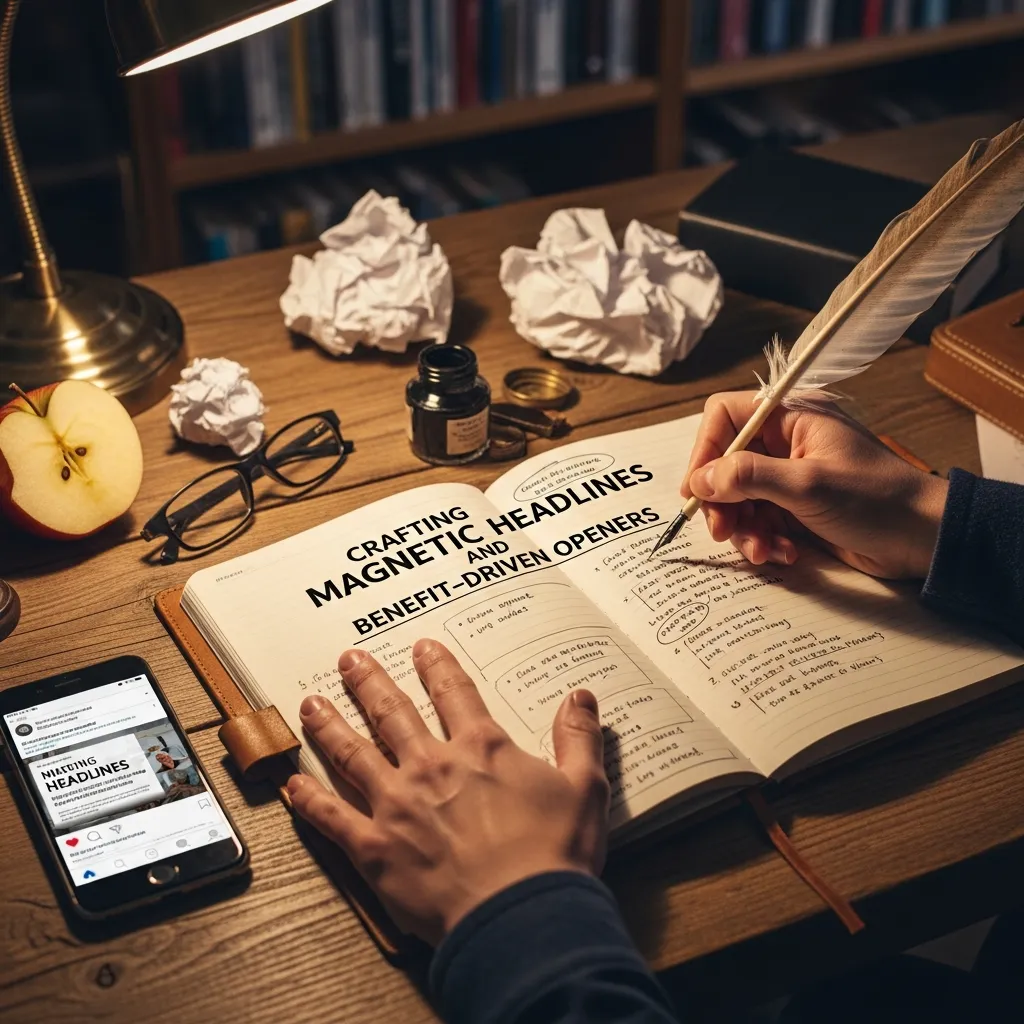
Your headline is the first impression you make, and a single misstep can send readers scrolling past your content. To harness the power of effective copywriting hacks, start by experimenting with numbers, power words, and targeted questions. Headlines that promise a clear benefit—such as “Boost Sales by 30% with This Simple Formula”—offer instant value, piquing curiosity and encouraging further reading.
When crafting your headline, consider the underlying motivation of your audience. Are they seeking time savings, financial gain, or creative inspiration? Align your headline with those desires. In today’s fast-paced environment, busy professionals scan dozens of headlines in minutes—so yours must leap off the page.
After securing attention, transition smoothly into a benefit-driven opener. Instead of leading with features (e.g., “Our software offers automated reports”), reframe to highlight the outcome: “Save 10 hours weekly with instant, automated reports that keep your projects on track.” This shift from features to benefits taps into the reader’s emotional core, showing them exactly what’s in it for them.
To sharpen your opener, explore resources like the Purdue OWL, which offers guidelines on persuasive writing and clear structure. Pair that knowledge with A/B tests to discover which headlines and lead sentences resonate most with your specific audience. Over time, you’ll build a swipe file of high-performing examples, making future campaigns even more impactful.
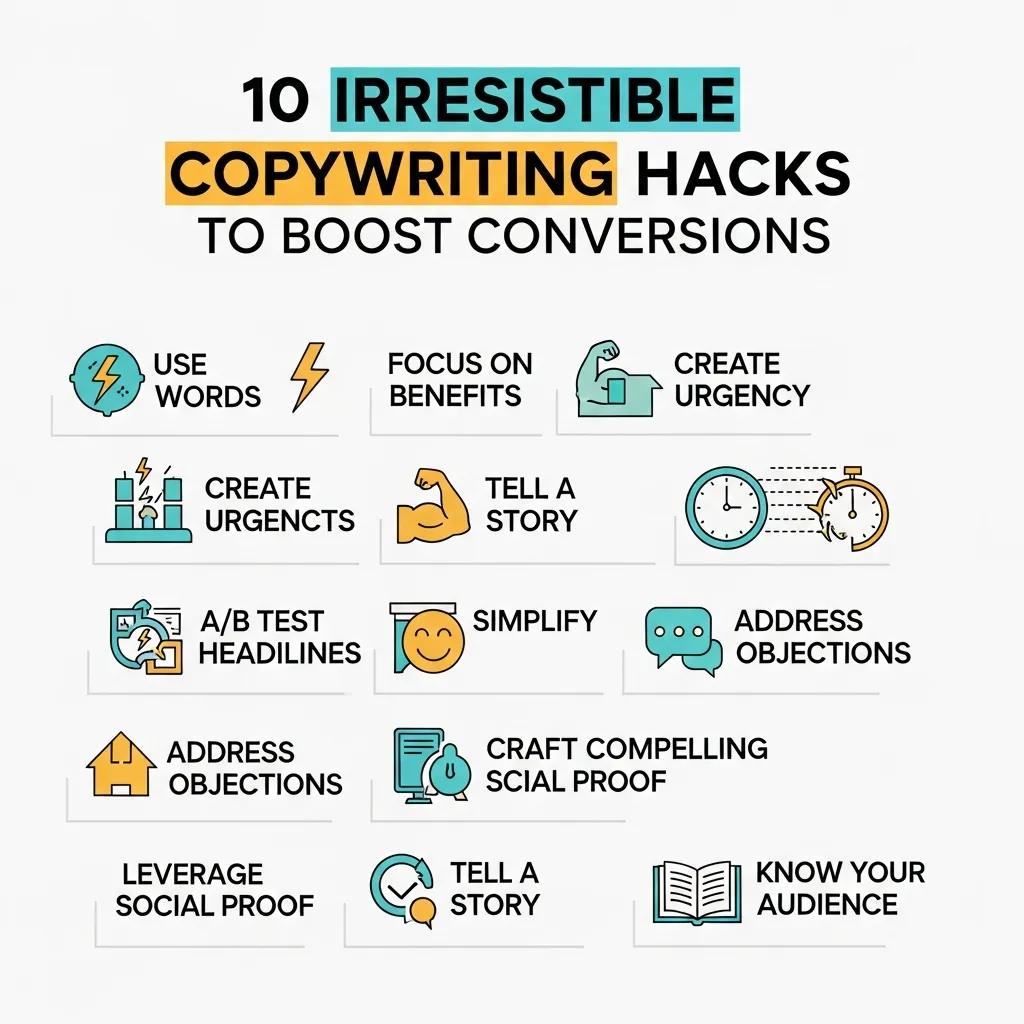
By mastering magnetic headlines and benefit-driven openers—two essential copywriting hacks—you’ll establish an immediate connection with your readers. This foundation not only boosts click-through rates but also sets the stage for delivering deeper value throughout your content.
Harnessing Storytelling and Social Proof for Engagement
Storytelling remains one of the most influential copywriting hacks for forging emotional bonds with your audience. Stories activate parts of the brain tied to empathy and memory, making messages more memorable. To weave an effective narrative, begin with a scenario that mirrors your reader’s reality. For instance: “Imagine logging into your inbox each morning to find everything neatly organized, freeing up time for high-impact tasks.” From there, identify the challenge, detail the transformation, and spotlight the solution you provide.
Incorporating conflict and resolution guides readers through an emotional journey. Highlight how your offering shifts the narrative—from frustration to triumph. This structure not only captures attention but also reinforces the value of your product or service in a relatable context.
Alongside storytelling, social proof serves as a powerful endorsement that bolsters credibility. Display customer testimonials, success metrics, or case studies that illustrate real-world results. A simple line like “Join over 15,000 professionals who have doubled their open rates” can significantly reduce skepticism.
Leverage authoritative sources to strengthen your claims. For insights on consumer trust, consult studies from reputable institutions such as the University of North Carolina Writing Center or government publications detailing digital marketing trends. Citing external data not only enriches your narrative but also anchors your copy in verified research.
Together, storytelling and social proof create a compelling tapestry that guides readers from emotional engagement to logical affirmation. By practicing these copywriting hacks, you’ll craft content that resonates on multiple levels—boosting both trust and conversions.

Applying the PAS Framework and Leveraging Power Words
The Problem–Agitate–Solution (PAS) formula stands out among copywriting hacks for its clear, persuasive structure. First, identify a core pain point affecting your audience: “Are your email opens stuck in single digits?” Next, agitate by emphasizing the frustration: “Watching carefully crafted campaigns go unopened can feel like shouting into the void.” Finally, present your solution: “Increase open rates by up to 50% with our proven headline formulas.”
This progression hooks readers by acknowledging their struggles, intensifying their desire for relief, and offering a clear path forward. It’s a straightforward yet highly effective approach, especially when combined with well-chosen power words.
Power words—terms like “exclusive,” “instantly,” “guaranteed,” and “secret”—trigger emotional responses that can nudge readers toward action. However, use them judiciously. Overuse can diminish their impact and erode trust. Instead, sprinkle power words strategically in headlines, subheads, and calls to action to heighten urgency or exclusivity.
For example, contrast “Download our guide” with “Claim your exclusive guide instantly.” The latter conveys immediacy and privilege, compelling readers to act now rather than later. Combine PAS with power words to create copy that feels urgent and essential, tapping into fears of missing out.
To refine your skillset, analyze high-converting examples from authoritative sites, such as research briefs from the National Institutes of Health . Observe how they use concise language and impactful phrasing. Then, adapt their clarity and precision to your own copy, integrating PAS and power words for maximum persuasion.
Mastering the PAS framework and harnessing power words are pivotal copywriting hacks that deliver direct, actionable messaging. When executed properly, they transform abstract concepts into tangible benefits that drive conversions.
Maintaining a Conversational Tone and Optimizing Readability
One of the most underrated copywriting hacks is the shift from formal, corporate language to a conversational tone. Writing as if you’re speaking to a friend builds rapport and lowers barriers to engagement. Use contractions, ask rhetorical questions, and employ short, varied sentence lengths. For instance, replace “Customers will benefit from our new feature” with “Can’t wait to see how much time you’ll save with this new feature?”
Conversational copy feels personal and approachable, fostering a sense of connection that encourages readers to stay the course. This tone works especially well in email marketing, blog posts, and social media updates where authenticity is key.
Alongside tone, readability is crucial. Online audiences typically scan rather than read word-for-word, so break content into bite-sized paragraphs, bullet points, and numbered lists. Use clear subheadings to guide readers through your narrative, allowing them to locate key information quickly.
Limiting paragraph length to two or three sentences ensures white space on the page, making your content appear less daunting. Additionally, consider font size and line height when designing web layouts to reduce eye strain. For deeper insights into readability best practices, refer to guidelines published by the Centers for Disease Control and Prevention , which highlight the importance of clear, accessible formatting in public communications.
By integrating a conversational voice with strategic formatting, you’ll keep readers engaged and reduce bounce rates. These copywriting hacks—though simple—play a critical role in ensuring your message is both compelling and easy to consume.

Designing Compelling Calls to Action and Embracing Continuous Improvement
A clear, benefit-driven call to action (CTA) is the final push your reader needs to convert. Generic prompts like “Submit” or “Click Here” lack context and fail to motivate. Instead, craft CTAs that specify the reward and the next step: “Get My Free Checklist Now” or “Start Doubling Your Sales Today.” By embedding the benefit directly into the CTA, you remove ambiguity and set clear expectations.
Position your CTA prominently—above the fold when possible—and surround it with whitespace to draw the eye. If you’re using multiple CTAs on a long page, ensure each one addresses a different stage of the buyer journey, from “Learn More” for early-stage readers to “Book My Demo” for those ready to engage.
Even the most persuasive copywriting hacks require validation through data. Implement A/B tests to compare variations of headlines, introductions, CTAs, and layouts. Track key metrics—open rates, click-through rates, time on page, and conversions—to identify what resonates most with your audience.
Testing is not a one-time task; it’s an ongoing practice. In today’s dynamic market, subtle shifts in language, design, or audience preferences can impact performance. Schedule regular review cycles—monthly or quarterly—to analyze your results, document insights, and apply learnings to new campaigns.
This culture of continuous improvement ensures that your copy remains fresh, relevant, and effective. By marrying compelling CTAs with rigorous testing, you’ll unlock exponential gains over time and maintain a competitive edge in today’s marketplace.