This guide breaks down the complete copywriter job description, exploring core responsibilities, necessary technical skills, and career expectations. Whether you want to hire top talent or build your own career, these actionable insights provide everything you need to understand the copywriting industry and drive actual marketing results.
Searching for the perfect copywriter job description? You need clarity on the exact roles, essential skills, and daily responsibilities that make this marketing position highly successful.
What Does a Copywriter Actually Do?
A copywriter serves as the vital bridge between a brand and its audience. They craft persuasive, clear, and engaging text designed to educate, inform, or prompt a specific action. You will find their work across digital and print mediums, from catchy social media captions and email newsletters to extensive white papers and video scripts. Understanding the nuances of this role requires looking deep into the typical copywriter job description.
The primary objective of this role revolves around driving conversions. While content writers typically focus on long-form educational material, copywriters focus on strategic messaging that aligns with broader marketing initiatives. They collaborate closely with graphic designers, marketing managers, and product teams to ensure the visual and textual elements of a campaign harmonize perfectly.
When you review a standard copywriter job description, you will notice a heavy emphasis on understanding target audiences. A successful professional in this field does not just write well; they understand human psychology, consumer behavior, and the pain points of their specific market. They use this knowledge to craft messages that resonate deeply and compel the reader to take action, whether that action is purchasing a product, subscribing to a newsletter, or downloading a guide.
The Ultimate Copywriter Job Description
To fully grasp the scope of this profession, we must dissect the standard copywriter job description into actionable categories. Employers expect these professionals to wear multiple hats, balancing creativity with analytical thinking.
Daily Duties and Responsibilities
The day-to-day life of a copywriter involves a dynamic mix of independent writing and collaborative planning. According to most agency and in-house requirements, daily duties include:
- Writing clear, compelling, and error-free copy tailored to various marketing channels.
- Interpreting creative briefs to understand project requirements, audience demographics, and brand guidelines.
- Conducting extensive research on industry trends, competitor messaging, and product specifications.
- Collaborating with PR and marketing departments to conceptualize innovative advertising campaigns.
- Editing and proofreading copy to guarantee grammatical accuracy and alignment with the brand voice.
- Optimizing digital content using SEO best practices to increase organic visibility and search engine rankings.
- Presenting copy concepts to stakeholders and integrating feedback seamlessly into revisions.
A strong copywriter job description always highlights the importance of adaptability. One morning, a writer might draft a highly technical business-to-business white paper, and by the afternoon, they might pivot to writing witty, short-form copy for a lifestyle brand’s Instagram account.
Strategic and Creative Expectations
Beyond the physical act of typing words, copywriters hold significant strategic responsibilities. They actively participate in shaping the overall Content Marketing Strategy. By understanding the marketing funnel, they create targeted messages for the awareness, consideration, and decision stages of the buyer’s journey.
Employers rely on copywriters to maintain brand consistency. A company’s voice must remain recognisable whether a customer reads a billboard, a product description, or a customer service email. The copywriter acts as the guardian of this voice, ensuring every piece of communication reflects the brand’s core values and personality.
Essential Skills Needed to Succeed

Every effective copywriter job description outlines a specific set of hard and soft skills. Mastery of these skills separates average writers from exceptional communicators who drive measurable business growth.
Hard Skills for Copywriters
- Exceptional Writing and Editing: The foundational ability to write persuasively and flawlessly across different formats and styles.
- Search Engine Optimization (SEO): Understanding how to naturally integrate keywords, structure headers, and write compelling meta descriptions without compromising readability. Following strict SEO Writing Guidelines is non-negotiable for digital roles.
- Research Proficiency: The capacity to quickly digest complex information and translate it into accessible, engaging consumer-facing content.
- Content Management Systems (CMS): Familiarity with platforms like WordPress, HubSpot, or Shopify to format, upload, and publish content directly.
- Data Analysis: Basic knowledge of tools like Google Analytics to track how copy performs, interpret bounce rates, and optimize future campaigns based on data.
Soft Skills for Copywriters
- Empathy: The ability to step into the customer’s shoes, understand their frustrations, and speak directly to their needs.
- Receptiveness to Feedback: Creative work is inherently subjective. Copywriters must accept constructive criticism from creative directors and clients without taking it personally.
- Time Management: Agency environments often require writers to juggle multiple tight deadlines simultaneously. Organizing priorities effectively is crucial for survival.
- Curiosity: A natural desire to learn about new industries, products, and marketing techniques keeps a copywriter’s output fresh and relevant.
Different Types of Copywriting Roles
The specific details of a copywriter job description will vary significantly based on the work environment and the writer’s specialization. Understanding these distinctions helps both job seekers and hiring managers align their expectations.
Agency vs. In-House vs. Freelance
Working at a marketing or advertising agency offers a fast-paced environment where writers handle multiple clients across diverse industries. Agency copywriters must switch brand voices rapidly and thrive under pressure. They frequently pitch ideas directly to clients and collaborate with large creative teams.
In-house copywriters work directly for a single brand. This environment allows the writer to dive deep into one specific industry and master a singular brand voice. They handle all internal and external communications, from product packaging to corporate newsletters. In-house roles typically offer more predictable hours and a deep integration into the company’s long-term Digital Marketing Careers ecosystem.
Freelance copywriters operate as independent contractors. They enjoy the flexibility of choosing their clients and setting their own hours, but they must also handle business administration, client acquisition, and self-promotion. Freelancers often specialize in specific niches, such as healthcare, finance, or technology, allowing them to command higher rates for their specialized knowledge.
Specializations Within Copywriting
- SEO Copywriter: Focuses heavily on web pages, blog posts, and digital articles designed to rank highly on search engines while driving conversions.
- Direct Response Copywriter: Specializes in copy designed to elicit an immediate action, such as sales pages, landing pages, and direct mail letters.
- Technical Copywriter: Translates complex jargon into readable material for industries like software, engineering, or medicine.
- Social Media Copywriter: Crafts engaging, platform-specific content tailored for Instagram, LinkedIn, X, and TikTok.
Copywriting Roles Comparison Table
|
Role Type |
Primary Focus |
Work Environment |
Pace & Variety |
|---|---|---|---|
|
Agency Copywriter |
Multiple client campaigns, pitching ideas |
Fast-paced, collaborative |
High variety, frequent context switching |
|
In-House Copywriter |
Single brand voice, comprehensive coverage |
Structured, deeply integrated |
Low variety, high depth and consistency |
|
Freelance Copywriter |
Specialized niches, direct client interaction |
Independent, flexible |
Variable, requires business management |
|
SEO Copywriter |
Search rankings, digital visibility |
Digital-first, analytical |
Steady focus on keywords and intent |
|
Technical Copywriter |
Complex subjects, B2B communication |
Specialised, research-heavy |
Highly focused on accuracy and clarity |
Educational Requirements and Qualifications

When reviewing a typical copywriter job description, you will find that a formal degree is highly preferred, though not always strictly mandatory. Most employers look for a Bachelor’s degree in English, Communications, Journalism, Marketing, or a related field. These programs build the critical thinking, research, and persuasive writing skills necessary for the job.
However, the copywriting industry places a massive emphasis on a candidate’s portfolio. A brilliant portfolio showcasing successful campaigns, engaging landing pages, and creative ad copy will almost always outweigh a specific academic credential. Employers want proof that you can generate results. Many successful professionals enter the field through alternative paths, leveraging online courses, specialized bootcamps, and relentless self-teaching. Check out resources from the Content Marketing Institute for excellent training materials that bolster a resume.
Experience requirements vary by seniority. A junior copywriter job description might ask for one to two years of experience, often gained through internships or freelance projects. A senior copywriter requires five to seven years of proven success, alongside leadership capabilities and deep strategic knowledge.
Average Salary Expectations and Career Growth
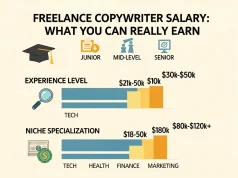
The financial rewards in this field depend heavily on location, experience, and specialization. While entry-level positions offer standard starting wages, senior writers and highly specialized freelancers can command lucrative incomes. According to data from the Bureau of Labor Statistics, the median annual wage for writers and authors sits comfortably in the middle-class range, but specialized advertising copywriters often earn significantly more.
Entry-level copywriters typically earn between $45,000 and $55,000 annually. Mid-level professionals with three to five years of experience see their salaries rise to the $65,000 to $80,000 range. Senior copywriters, creative directors, and highly sought-after direct response freelancers frequently exceed $100,000 per year.
Career progression usually follows a clear trajectory. A writer might start as a junior copywriter, advance to a mid-level role, and eventually become a senior copywriter. From there, leadership opportunities open up, such as Associate Creative Director, Creative Director, or Head of Content.
Common Mistakes to Avoid in Copywriting
Even experienced writers occasionally fall into bad habits. A successful copywriter job description implies that the candidate knows how to avoid these common pitfalls that derail marketing campaigns.
- Focusing on Features Instead of Benefits: Customers do not buy a product because of its technical specifications; they buy it because it solves a problem. Always highlight how the product improves the user’s life.
- Ignoring the Target Audience: Writing generic copy that tries to appeal to everyone usually appeals to no one. You must tailor your tone, vocabulary, and messaging to a highly specific demographic.
- Overcomplicating the Language: Never use a long word where a short one will do. Complex jargon alienates readers. Clarity always trumps cleverness.
- Neglecting the Call to Action (CTA): Every piece of copy needs a purpose. Failing to tell the reader exactly what to do next (e.g., “Buy Now,” “Subscribe Today,” “Learn More”) kills conversion rates.
- Failing to Proofread: Typos and grammatical errors destroy brand credibility instantly. Meticulous proofreading remains a core component of every copywriter job description.
Pro Tips and Expert Insights for Aspiring Copywriters
To truly stand out in this competitive field, you need to go beyond the basics. Here are expert insights that will elevate your craft and make you an invaluable asset to any marketing team.
- Read Your Copy Out Loud: This simple trick exposes awkward phrasing, clunky transitions, and unnatural rhythms. If you stumble while reading it, your audience will stumble while reading it.
- Study Psychology: Great copywriting relies heavily on human psychology. Understand concepts like social proof, scarcity, reciprocity, and authority to make your messaging more persuasive.
- Keep a Swipe File: Create a digital folder to save brilliant ads, subject lines, and landing pages that catch your attention. Analyze these examples to understand why they work and draw inspiration from them when you feel stuck.
- Master the Headline: Eight out of ten people will read your headline, but only two out of ten will read the rest of the copy. Spend a disproportionate amount of your time crafting and testing powerful, curiosity-inducing headlines.
- Embrace A/B Testing: Never rely solely on intuition. Write multiple variations of your copy and let the data dictate which version performs best. Platforms like Google Analytics provide invaluable insights into user behaviour.
How to Write a Compelling Copywriter Job Description

If you are an employer looking to hire top talent, crafting the right copywriter job description is your first crucial step. A generic, boring posting will attract generic, boring writers. You want your job ad to reflect the creativity and professionalism you expect from the candidates.
Start with a captivating company introduction. Highlight your workplace culture, the perks of joining your team, and the exciting projects the new hire will tackle. Clearly define the daily responsibilities, separating the strategic tasks from the routine execution.
Be specific about the skills you require. If you need someone with deep B2B technology experience, state that prominently. If SEO knowledge is non-negotiable, make sure it sits at the top of the requirements list. Finally, ask for a portfolio. Give candidates clear instructions on what type of writing samples you want to see, as this will save you hours of reviewing unqualified applications.
You must also set clear expectations regarding the evaluation process. Will there be a paid writing test? How many interview rounds should they expect? Transparency builds trust and attracts confident, professional writers who value clear communication.
Conclusion
Understanding the details of a copywriter’s job description is critical for both hiring managers seeking talent and writers building their careers. By mastering the core responsibilities, technical skills, and strategic thinking required, you position yourself for immense success in the marketing world. Start refining your portfolio or drafting your perfect job posting today to see immediate results.
FAQs
1. What is the main purpose of a copywriter’s job description?
A copywriter’s job description outlines the specific duties, required skills, and overall expectations for a professional writer tasked with creating persuasive marketing and promotional materials. It helps employers attract qualified candidates and helps writers understand the exact requirements of a potential role.
2. What is the difference between a copywriter and a content writer?
While both roles involve writing, a copywriter focuses on creating persuasive text designed to drive a specific action, such as a sale or sign-up. A content writer focuses on creating educational, informative, or entertaining long-form text, such as blog posts and comprehensive guides, aimed at building brand trust over time.
3. Do you need a degree to become a copywriter?
A formal degree in English, marketing, or communications is highly preferred by many employers, but it is not strictly required. A strong, proven portfolio showcasing successful writing samples and campaigns is often the most critical factor in securing a copywriting job.
4. What are the most important skills listed in a copywriter’s job description?
Essential skills include exceptional writing and editing, a strong understanding of SEO, audience empathy, research proficiency, adaptability to different brand voices, and the ability to collaborate effectively with creative and marketing teams.
5. How much does a copywriter make annually?
Salaries vary based on experience, location, and specialisation. Entry-level copywriters typically earn between $45,000 and $55,000, mid-level writers earn $65,000 to $80,000, and senior copywriters or specialised freelancers can earn well over $100,000 per year.
6. What does an SEO copywriter do?
An SEO copywriter specialises in writing web content that is highly optimised for search engines while remaining engaging for human readers. They conduct keyword research, structure content with proper headings, and write meta descriptions to improve organic visibility and drive web traffic.
7. Can copywriters work remotely?
Yes, copywriting is one of the most flexible professions available. Many copywriters work fully remotely for agencies, in-house teams, or as independent freelancers, communicating with clients and teams via digital collaboration tools.
8. What is a copywriting swipe file?
A swipe file is a collection of tested and proven advertising materials, such as headlines, sales letters, and emails, that a copywriter saves for inspiration. Writers study these successful examples to generate new ideas for their own marketing campaigns.
9. What should a beginner include in their copywriting portfolio?
Beginners should include three to five strong pieces of writing that showcase their versatility. If they lack professional client work, they can create “spec” (speculative) ads, rewriting existing brand campaigns or creating fictional marketing materials to demonstrate their strategic thinking and writing ability.
10. How do copywriters measure the success of their work?
Copywriters measure success using key performance indicators (KPIs) such as conversion rates, click-through rates, time spent on page, organic search rankings, and overall return on investment (ROI) generated by the specific marketing campaign they wrote for.