Understanding What Is Copywriting transforms ordinary words into powerful tools that drive sales and engagement. This comprehensive guide covers essential definitions, proven frameworks, beginner strategies, and expert tips to help you craft compelling messages that command attention and deliver measurable business results.
Are you asking yourself What Is Copywriting and how it works? This guide reveals the core secrets of persuasive writing to help you master this high-income skill quickly.
What Is Copywriting and Why Does It Matter?
At its core, What Is Copywriting refers to the strategic act of writing text for the purpose of advertising or other forms of marketing. The product, called copy or sales copy, is written content that aims to increase brand awareness and ultimately persuade a person or group to take a particular action.
Whether you are browsing a website, reading an email, or looking at a social media ad, you are consuming copy. Businesses rely on effective copy to connect with their audience, build trust, and drive revenue. Unlike traditional writing, which might seek to entertain or educate, the primary goal here is conversion.
The Psychology Behind Persuasive Writing
To truly grasp What Is Copywriting, you must understand human psychology. People buy based on emotion and justify their purchases with logic. Great copywriters tap into desires, fears, and aspirations. They use emotional triggers to make the reader feel understood. By addressing pain points and offering clear solutions, you guide the reader toward a purchasing decision or a desired action, such as subscribing to a newsletter or downloading a guide.
The Role of a Copywriter
A copywriter is a professional who crafts these persuasive messages. They research target audiences, analyze competitor strategies, and develop a unique brand voice. Their daily tasks might include writing landing pages, creating email sequences, scripting video ads, and optimizing product descriptions. Success in this field requires a blend of creativity, analytical thinking, and a deep understanding of consumer behavior.
Key Differences: Copywriting vs. Content Writing
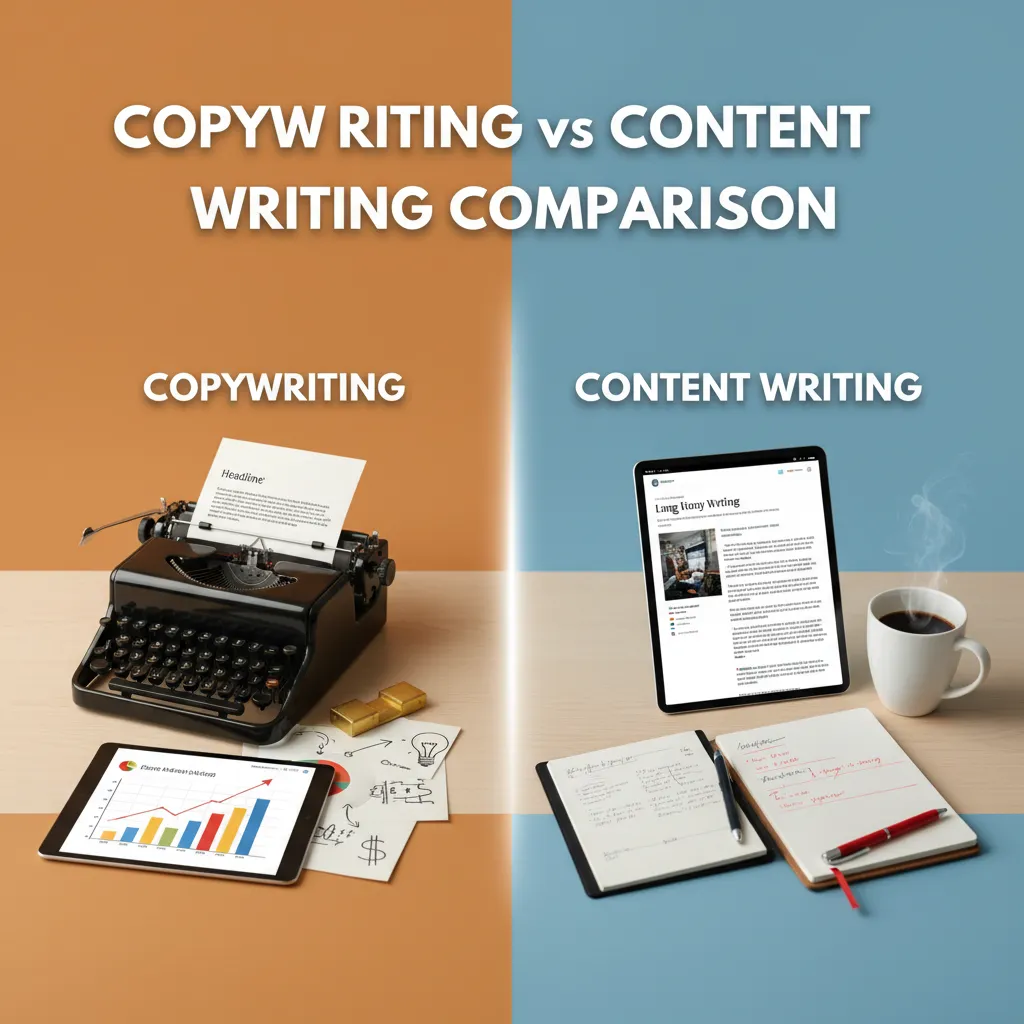
Many beginners confuse these two terms. While they overlap, their primary objectives differ significantly.
Conversion vs. Education
The easiest way to understand What Is Copywriting is to look at the end goal. Copywriting focuses on a direct response—getting the reader to click, buy, or subscribe immediately. Content writing, on the other hand, focuses on educating, informing, or entertaining the audience to build long-term relationships and brand loyalty.
Comparison Table: Copy vs. Content
|
Feature |
Copywriting |
Content Writing |
|---|---|---|
|
Primary Goal |
Persuade and convert (Action) |
Educate and engage (Information) |
|
Length |
Usually short-form (ads, emails) |
Usually long-form (blogs, whitepapers) |
|
Tone |
Direct, urgent, and persuasive |
Informational, conversational, helpful |
|
Metrics for Success |
Conversion rate, click-through rate |
Page views, time on page, shares |
Both are essential for a complete marketing strategy, but knowing when to use each is crucial for business growth.
Essential Frameworks for Beginners
To master What Is Copywriting, you should rely on proven frameworks. These formulas give your writing structure and ensure you hit all the necessary psychological triggers.
The AIDA Formula
AIDA stands for Attention, Interest, Desire, and Action. It is the most fundamental framework in the industry.
- Attention: Hook the reader with a bold headline or a surprising fact.
- Interest: Keep them reading by introducing a fascinating concept or a relatable problem.
- Desire: Explain the benefits of your solution and how it will improve their life.
- Action: Tell them exactly what to do next with a clear call-to-action (CTA).
The PAS Formula
PAS stands for Problem, Agitation, Solution. This framework is highly effective for social media and email marketing.
- Problem: Identify a specific pain point your audience faces.
- Agitation: Emphasize how frustrating or damaging this problem is.
- Solution: Introduce your product or service as the ultimate fix.
By applying these frameworks, you ensure your writing remains focused and highly persuasive. You can read more about these techniques from authoritative sources like Copyblogger, which offers extensive resources on content marketing and persuasive writing.
How to Write Copy That Converts
Now that you know What Is Copywriting, how do you actually write copy that gets results? Follow these actionable steps to elevate your skills.
Know Your Audience Inside and Out
You cannot persuade someone if you do not know what they want. Before you write a single word, conduct thorough research. Create buyer personas. Read customer reviews on Amazon or forums like Reddit to see the exact language your audience uses. Mirror their vocabulary in your copy to build instant rapport.
Focus on Benefits, Not Features
A common trap for beginners is listing product features instead of benefits. Features describe what a product does; benefits describe how it improves the buyer’s life. For example, a feature of a smartphone is a “4000mAh battery.” The benefit is “Never worry about your phone dying in the middle of the day again.” Always answer the reader’s ultimate question: “What is in it for me?”
Craft Magnetic Headlines
Your headline is the most important part of your copy. If it fails to grab attention, the rest of your text will go unread. Spend time writing multiple headline variations. Use strong action verbs, invoke curiosity, and clearly state the value proposition. According to research by Copyhackers, tweaking a headline can drastically improve conversion rates.
Optimize for Readability
Online readers scan; they do not read word-for-word. Make your copy visually appealing and easy to digest.
- Use short sentences and paragraphs.
- Include bulleted or numbered lists.
- Use bold text to highlight key phrases.
- Incorporate plenty of white space.
Common Mistakes to Avoid
Even seasoned professionals make errors. When learning What Is Copywriting, watch out for these conversion-killing mistakes.
Being Too Clever
Clarity always beats cleverness. If your reader has to think about what your headline means, you have lost them. Be direct and state your offer plainly. Avoid industry jargon that might confuse a layperson.
Weak Calls to Action (CTAs)
Your copy must guide the reader to a specific action. A weak CTA like “Click Here” is uninspiring. Instead, use action-oriented CTAs that emphasize the benefit, such as “Get Your Free Marketing Guide Now” or “Start Your 14-Day Free Trial.”
Ignoring the Editing Process
First drafts are rarely perfect. Great copy is forged in the editing phase. Read your text out loud to catch awkward phrasing. Cut out filler words. Ensure every sentence earns its place and pushes the reader toward the CTA.
Pro Tips and Expert Insights
To elevate your understanding of What Is Copywriting, consider these expert insights that separate top-tier writers from the rest.
Leverage Social Proof
People trust the opinions of others. Include testimonials, case studies, and user-generated content in your copy. When a potential customer sees that others have successfully used your product, their perceived risk decreases, making them more likely to buy. You can integrate this effectively into your landing page design.
Use the Power of Storytelling
Stories captivate the human brain. Weave narratives into your copy to make your brand memorable. Share the origin story of your product, or highlight a customer’s journey from struggle to success. Stories build emotional connections that facts and figures simply cannot achieve.
Master SEO Copywriting
In the digital age, you must write for both humans and search engines. SEO copywriting involves naturally integrating keywords—just like we are exploring What Is Copywriting—into your text so that it ranks well on Google. Use LSI (Latent Semantic Indexing) keywords to build topical authority. Ensure your meta descriptions and title tags are optimized. For a deep dive into SEO best practices, refer to Search Engine Journal.
The Different Types of Copywriting
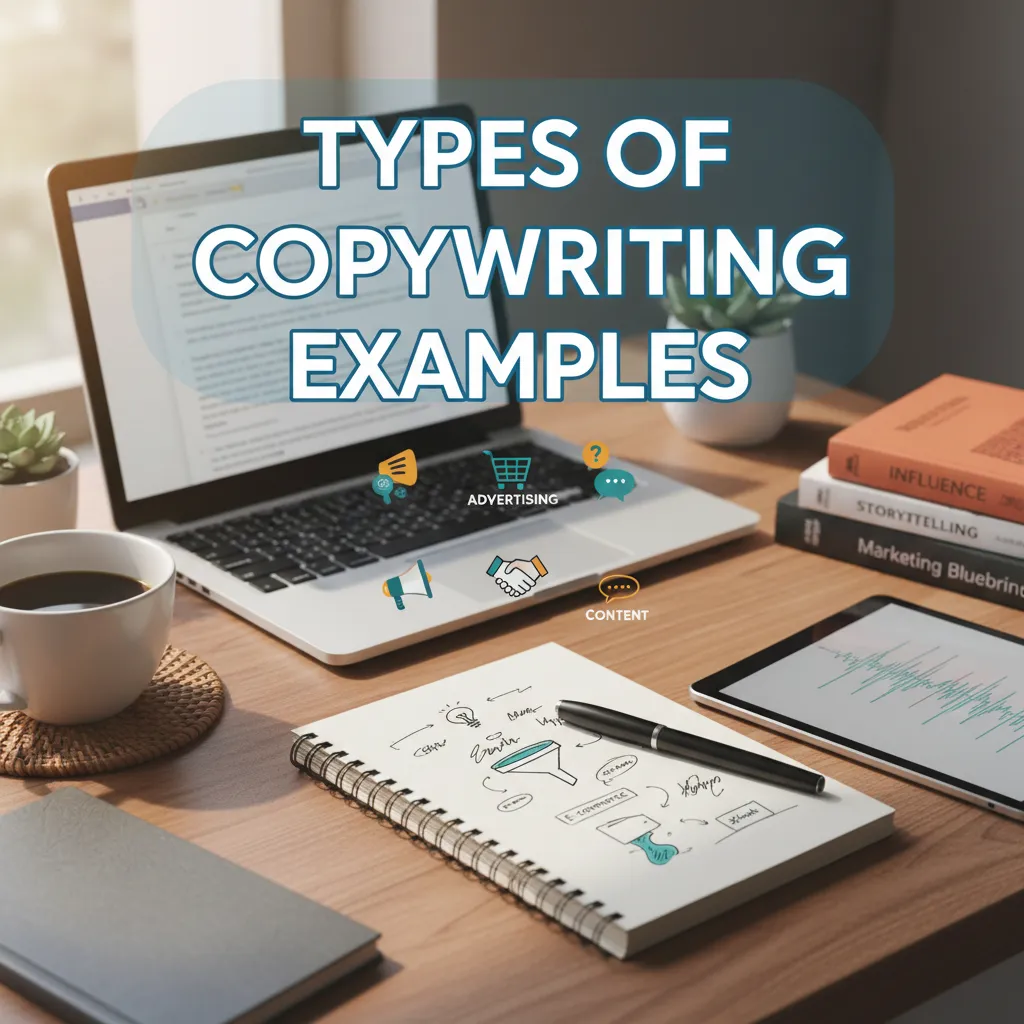
The field is vast, and different platforms require different approaches. Here is a breakdown of the main types you will encounter.
Direct Response Copywriting
This is the most traditional form. The goal is to elicit an immediate response. Examples include long-form sales letters, direct mail, and targeted Facebook ads. It relies heavily on emotional triggers and strong CTAs.
SEO Copywriting
This involves optimizing web pages to rank higher in search engine results while still persuading the reader. It requires a delicate balance of keyword placement and engaging writing.
Brand Copywriting
Brand copywriting focuses on establishing a company’s identity and voice. It is less about immediate sales and more about building a memorable image. Think of catchy slogans like Nike’s “Just Do It” or Apple’s minimalist product descriptions.
Email Copywriting
Email remains one of the highest ROI marketing channels. Email copywriters craft compelling subject lines to boost open rates and engaging body text to drive clicks. This requires mastering the art of the email marketing funnel.
Building a Career: How to Become a Copywriter
If understanding What Is Copywriting has inspired you to pursue it as a career, the barrier to entry is relatively low, but the skill ceiling is high.
Study the Greats
Read classic copywriting books like “The Adweek Copywriting Handbook” by Joseph Sugarman or “Ogilvy on Advertising” by David Ogilvy. Hand-copy successful sales letters to internalize the rhythm and structure of persuasive writing.
Build a Portfolio
You do not need clients to start a portfolio. Rewrite existing ads or create mock campaigns for products you love. Create a simple website to showcase your best work.
Network and Pitch
Start pitching your services to small businesses, marketing agencies, or freelance platforms. Connect with other writers on LinkedIn or Twitter. The more you put yourself out there, the faster you will land your first paying gig.
Ultimately, mastering What Copywriting Is gives you the power to drive action, build brands, and generate revenue. By understanding your audience, applying proven frameworks, and continuously refining your craft, you can turn simple words into powerful business assets. Start practicing today, focus on clear benefits, and watch your conversion rates soar.
Conclusion
Understanding What Is Copywriting is the first step toward transforming your marketing from passive information into a high-converting sales engine. By merging human psychology with proven frameworks like AIDA and PAS, you create a powerful bridge between your product and your customer’s needs. Start writing with empathy, focus on benefits, and watch your business results soar.
FAQs
1. What Is Copywriting in simple terms?
It is the process of writing persuasive text for marketing and advertising purposes. The goal is to prompt the reader to take a specific action, such as buying a product or subscribing to a service.
2. Do I need a degree to become a copywriter?
No, a formal degree is not required. Success depends on your ability to write persuasively, understand human psychology, and demonstrate results through a strong portfolio.
3. What is the difference between B2B and B2C copywriting?
B2B (Business-to-Business) copy targets other businesses and usually relies more on logic, ROI, and detailed specifications. B2C (Business-to-Consumer) targets individual consumers and relies heavily on emotion and quick solutions.
4. How much do copywriters make?
Income varies widely based on experience, location, and specialization. Freelance copywriters can charge per project or per hour, with top-tier writers earning six-figure incomes.
5. What are the best tools for copywriters?
Popular tools include Grammarly for editing, Hemingway App for readability, and keyword research tools like Ahrefs or SEMrush for SEO optimization.
6. Is AI replacing copywriters?
While AI tools can generate drafts and brainstorm ideas, they lack true human empathy, strategic thinking, and the ability to weave authentic stories. Human copywriters who leverage AI as a tool will remain highly valuable.
7. How long should my sales copy be?
Copy should be as long as necessary to make the sale, but no longer. High-ticket items usually require long-form copy to address all objections, while low-cost, impulse buys work well with short-form copy.
8. What Is Copywriting in digital marketing?
Digital marketing, it involves writing text for websites, social media, emails, and online ads. It integrates digital strategies like SEO and user experience (UX) to maximize online conversions.
9. How do I improve my copywriting skills?
Practice daily, study successful ads, read industry blogs, and seek feedback. Testing your copy in the real world (via A/B testing) is the best way to see what actually works.
10. What is a Call to Action (CTA)?
A CTA is a clear instruction telling the reader exactly what to do next. Examples include “Buy Now,” “Sign Up for Free,” or “Download the Guide.” It is a critical component of all copywriting.